
Meta and Facebook Lead Ads: How They Work and Setup
How Meta and Facebook lead ads work: instant forms on Facebook and Instagram, setup, testing, where leads go and how Malta businesses reply fast enough to win.
Facebook & Instagram ads · Leads
A lead form keeps people inside Facebook and Instagram, so it gets more leads, often cheaper. A landing page asks for more effort, so fewer people fill it in, but they usually know more about you. Malta Digital builds and tests both, in Meta ads management from €1,249 a month plus ad spend.
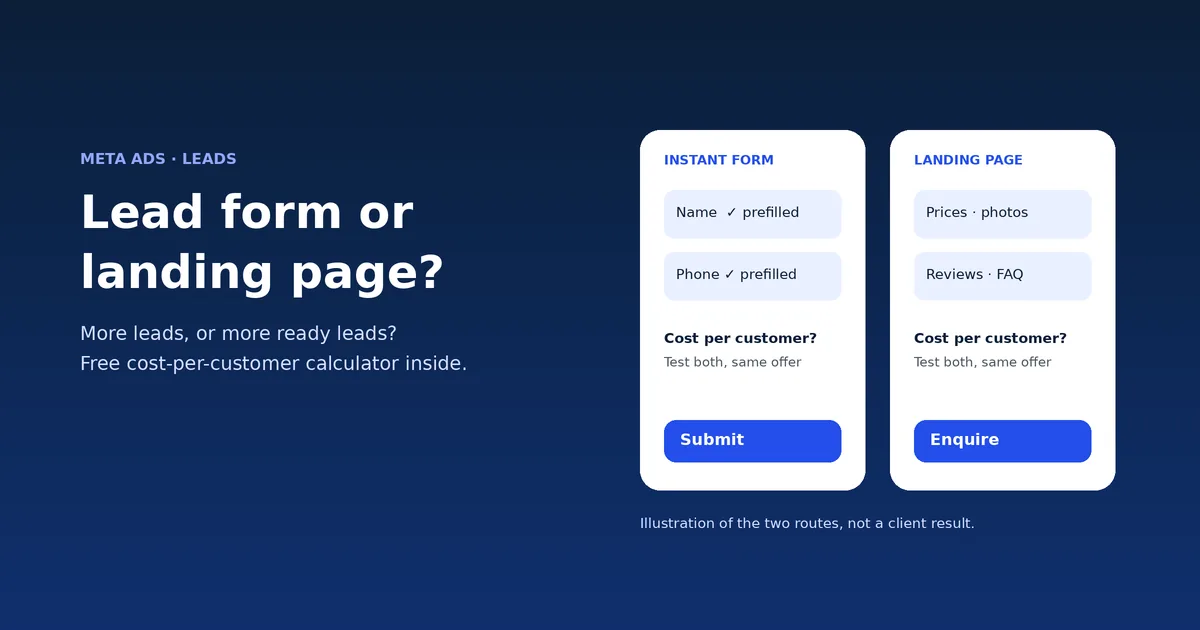
Use an instant lead form when speed and volume matter and you can call people back fast: home services, clinics, quotes. Use a landing page when people need to understand the offer first, or when you sell a higher-priced service. Judge both on cost per customer, not cost per lead. Malta Digital tests both in Meta ads management in Malta.
The difference
A lead form, which Meta calls an instant form, opens inside Facebook or Instagram. Name, email and phone are filled in for the person, so it takes a few taps. Nobody leaves the app and nothing has to load.
A landing page is a page on your own website. The ad sends people there, they read about the offer, and then they fill in a form or tap to call. It takes longer to load and asks for more effort, but you control everything people see before they enquire.
Both can work very well. The right choice depends on your offer, how fast you follow up, and what one customer is worth to you. Our guides to Facebook lead ads and landing pages for Facebook ads go deeper on each.
Side by side
Lead forms win on volume. Because they are quick, more people finish them, and cost per lead is often lower. The trade-off is intent: some people tap through without reading, or barely remember you when you call.
Landing pages win on understanding. People see prices, photos, reviews and answers before they enquire, so the ones who do usually know what they want. You also get website visits you can retarget later, and your Pixel and Conversions API learn from real actions on your site.
Meta offers a middle path inside the form itself. A Higher intent form adds a review screen so people confirm their details, and a short line telling them you may follow up. Meta notes these forms only show in Facebook and Instagram feeds on mobile.
| Check | Instant lead form | Landing page |
|---|---|---|
| Effort for the customer | A few taps, details prefilled | Page loads, then a form or call |
| Lead volume | Usually higher | Usually lower |
| Intent | Mixed; Higher intent forms help | Usually higher: people read first |
| What you control | Questions, intro, review screen | Everything: prices, photos, reviews, FAQs |
| Follow-up speed needed | Fast, ideally within the hour | Fast helps, but people know more |
| Best for | Quotes, call-backs, simple offers | Higher prices, explaining, trust |
Free tool
A cheap lead is not a cheap customer. Enter, for each route, the cost per lead, the share of leads you actually reach, and the share of those who buy. The calculator shows which one costs less per customer. The starting numbers are examples only. Nothing leaves this page.
Example numbers, not results. Replace them with yours.
Instant lead form
Landing page
This tool needs JavaScript. The maths: cost per lead ÷ share reached ÷ share that buy.
Apply now. We will look at your offer and follow-up, and tell you whether to start with a form, a page or both.
By business
Trades and home services, such as aluminium, plumbing and cleaning, usually do well with a short form plus one custom question, like the town and the job. People want a quote, and a fast call back closes them.
Clinics, salons and gyms can use either. A form works for a clear offer such as a first consultation. A landing page works better when prices, treatments or timetables need explaining. Property, B2B services and anything over a few hundred euro usually benefit from a landing page, or at least a Higher intent form, because the sale needs trust first.
If you cannot call or WhatsApp a lead within the hour, start with a landing page. Form leads go cold quickly, and in Malta people often enquire with two or three businesses at once.
How to test
Run the same offer, the same audience and the same creative, and change only the destination. Give each version enough budget to bring at least 30 leads, then compare what happened next: how many you reached, how many booked, and how many paid.
Track the whole path. For forms, mark each lead in a simple sheet or CRM as reached, qualified and won. For the page, make sure the Pixel and Conversions API record the enquiry. Meta’s performance goal for qualified leads now needs a Conversions API connection for new campaigns, so connecting your CRM pays off either way.
Most of the time the answer is “both, for different jobs”: a form for quick quote requests, and a page for the bigger, slower decisions.
Proof
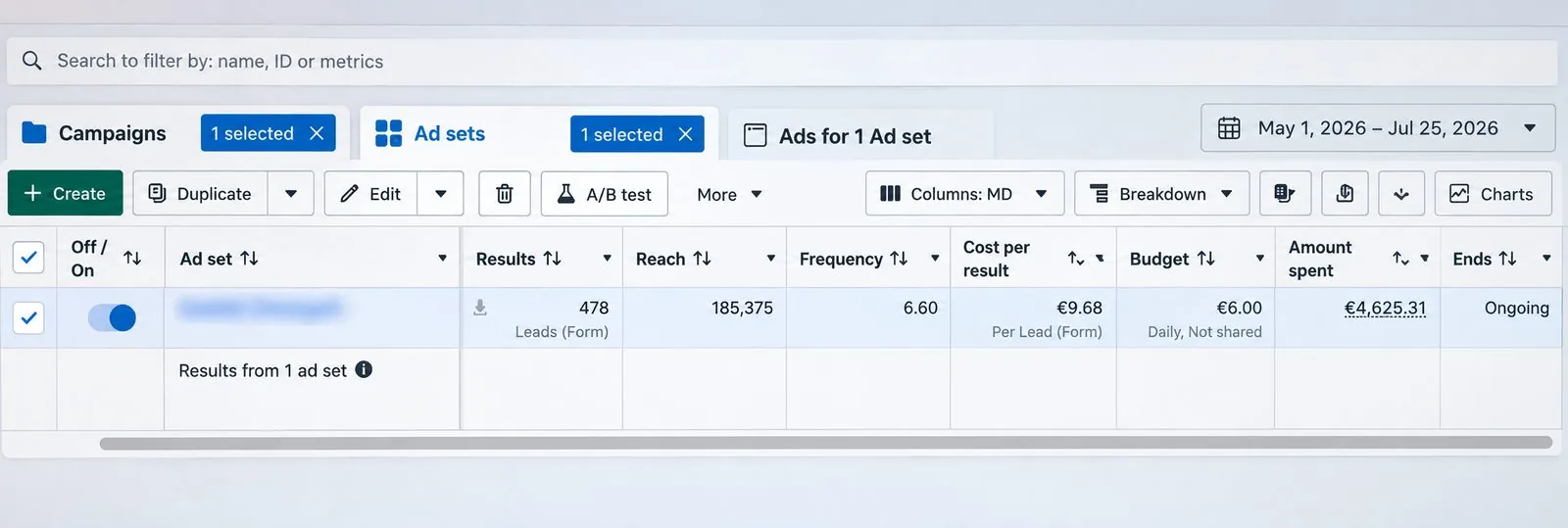
In a lead campaign we ran with an instant form, Meta recorded 478 leads at €9.68 each between 1 May and 25 July 2026. A lead is only worth its cost if you reach it and turn it into a booking, so we track every lead past the form, not only the cost per lead.
A few straight answers
Not always. Lead forms usually bring more and cheaper leads. Landing pages usually bring fewer, better-informed leads. Compare cost per customer, not per lead.
Because forms are so quick, some people submit without much thought. Higher intent forms, a custom question and fast follow-up all help.
A Meta instant form type with a review screen and a note that you may follow up. It shows in Facebook and Instagram feeds on mobile only.
When the offer needs explaining, the price is higher, or you cannot follow up within the hour. People arrive better informed.
Yes. Many Malta businesses use a form for quick quotes and a page for bigger decisions. Test them with the same offer and audience.
Yes. Landing pages and enquiry follow-up are part of the Customer Acquisition System, from €2,449 a month. Meta ads management starts from €1,249 a month plus ad spend.
Sources
Keep reading
How Meta and Facebook lead ads work: instant forms on Facebook and Instagram, setup, testing, where leads go and how Malta businesses reply fast enough to win.

What a landing page for Facebook and Instagram ads needs in Malta: message match, one clear action, a fast mobile page, tracking, and when to use a lead form.
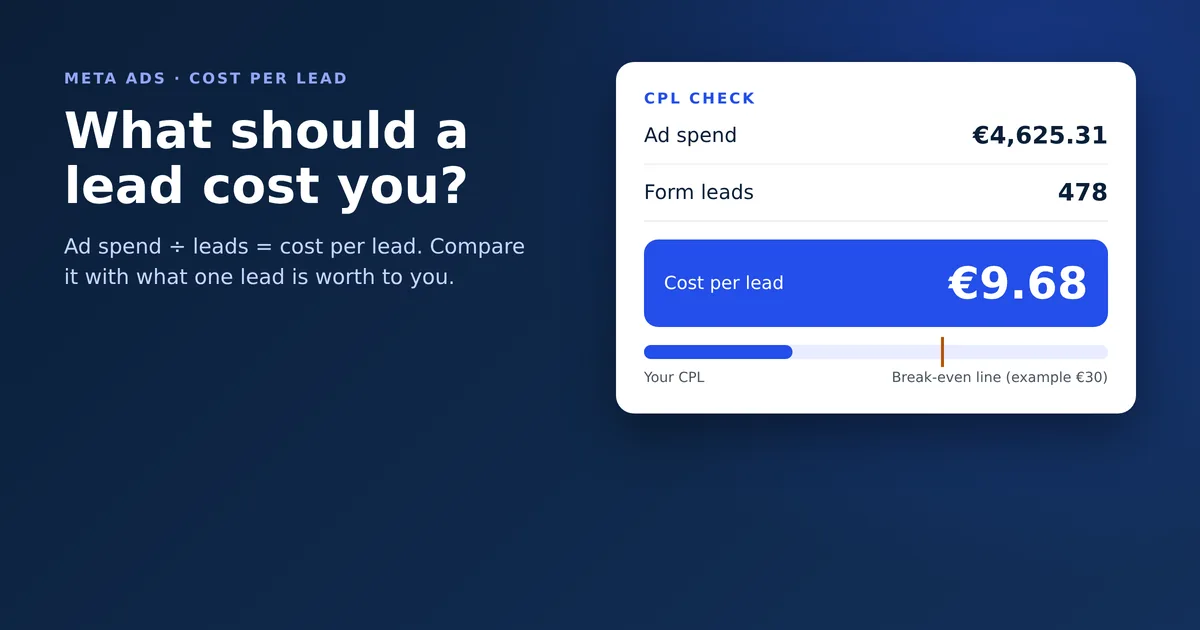
Facebook ads cost per lead in Malta: how to work it out, a real €9.68 example, the most you can afford to pay, and a free calculator for your own numbers.
A useful first step
We pick the right route for your offer, form, page or both, set up tracking and judge it on customers. Meta ads management from €1,249 a month plus ad spend.
Step 1 of 2
A few quick questions, about a minute. We usually reply within 2–3 hours.