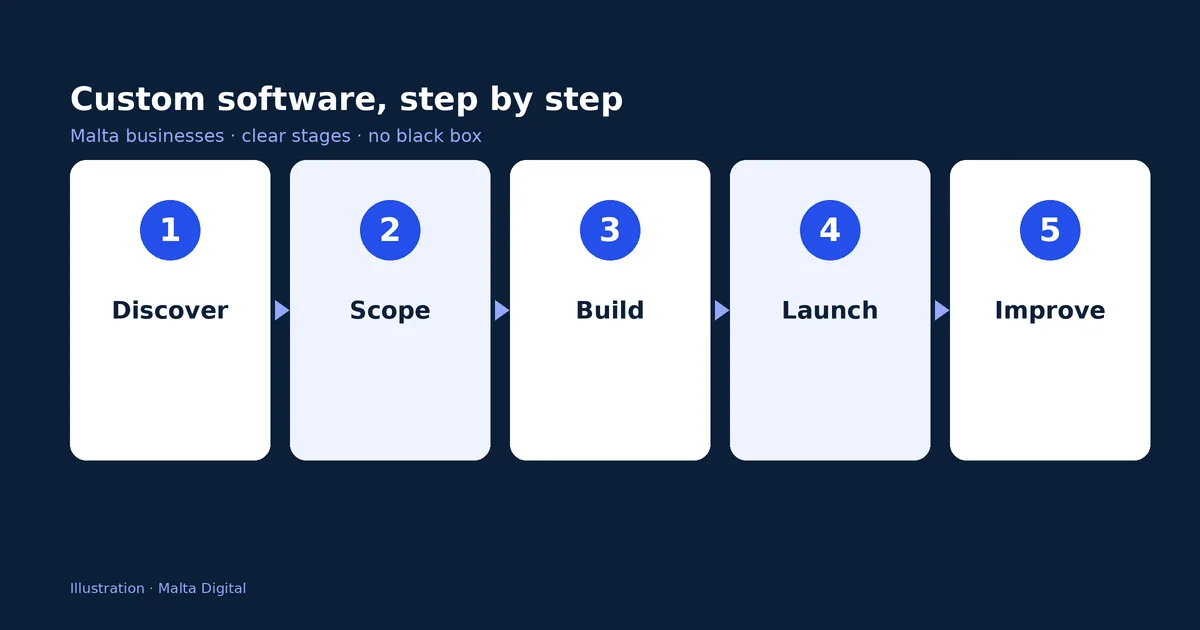
Custom software development process
How a custom build is scoped, designed, tested and handed over, in plain steps.
Systems & automation · Business systems
An inventory management system tracks what you have, where it is and when to reorder, so you stop selling stock you cannot fulfil. Malta Digital builds or connects this as part of a business system in Malta, including multi-warehouse stock, roles and reporting for larger teams.
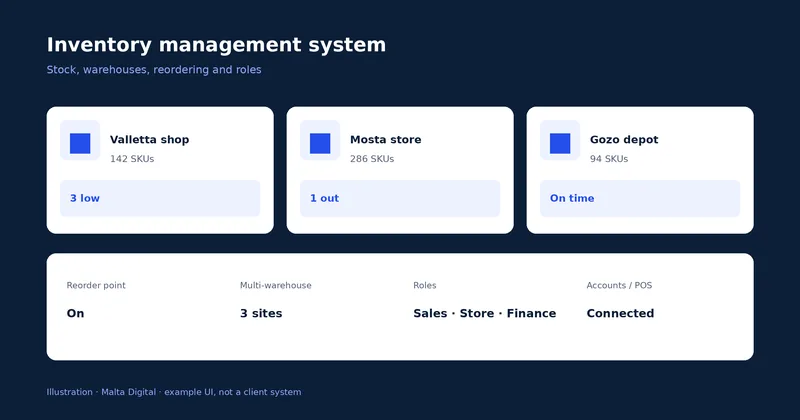
An inventory management system is software that records on-hand stock, locations, movements and reorder points. Malta Digital helps Malta and Gozo businesses choose a ready-made product, or build a custom system, when shops, warehouses and sales channels disagree. See how it fits on our business systems in Malta page. Custom systems start from €7,500 after scoping.
The felt problem
The painful version is simple. A customer pays online for a size you no longer have in the shop. A Mosta store transfers stock on a notepad. Accounts values one number, the warehouse another. Staff spend the afternoon apologising, then buying replacements at a worse price.
Example sceneA retailer sells from a Valletta counter, a Mosta store room and a small Gozo depot, plus an online shop. Each site keeps its own sheet. Weekend web orders sell the last two units that the shop already promised to a walk-in customer on Saturday morning.
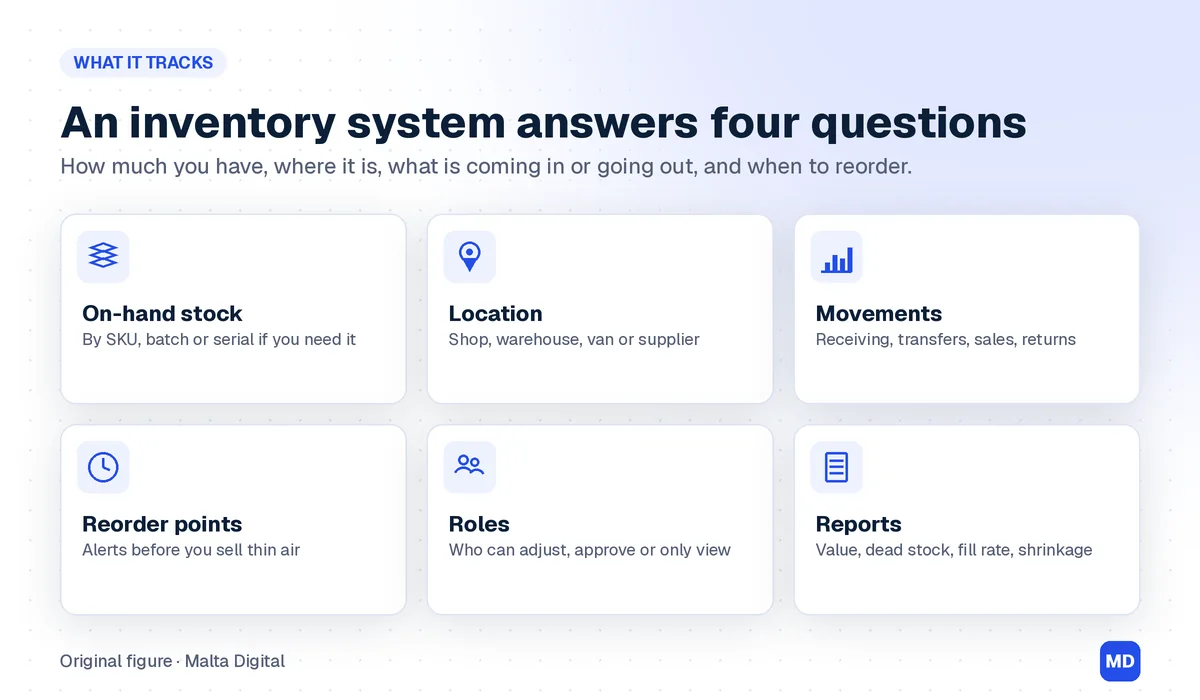
An inventory management system is the shared record that should have prevented that. It is not a vague promise of better visibility. It is a live count, a place, a movement history and a reorder point. If those four things are missing, you do not have a system. You have files.
Ready-made or custom
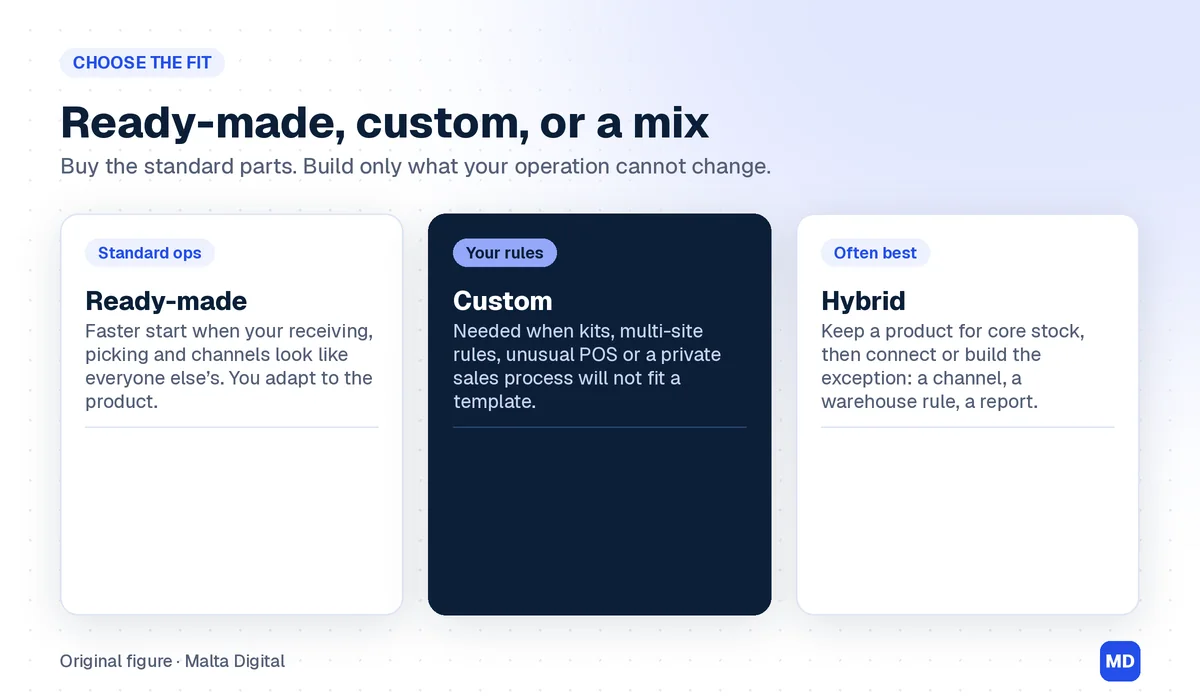
Ready-made software is the right first look for many teams. It is faster to start when your products, suppliers and sales channels behave like other businesses in your trade. You adapt a few habits to the product, connect a shop or a till, and get reorder alerts without a long build.
Custom work starts to earn its keep when the product pushes people outside it. Common signs: you sell kits or made-to-order items the template cannot track; you have several sites with different allocation rules; your till, vans or B2B portal will not sync; or managers need reports the vendor will not add. A hybrid is often honest. Keep a product for core stock, then connect or build the exception.
Malta Digital does both as part of custom software and business systems. We would rather tell you a product is enough than build something you do not need. When we do build, projects start from €7,500 after scoping.
Multi-site stock
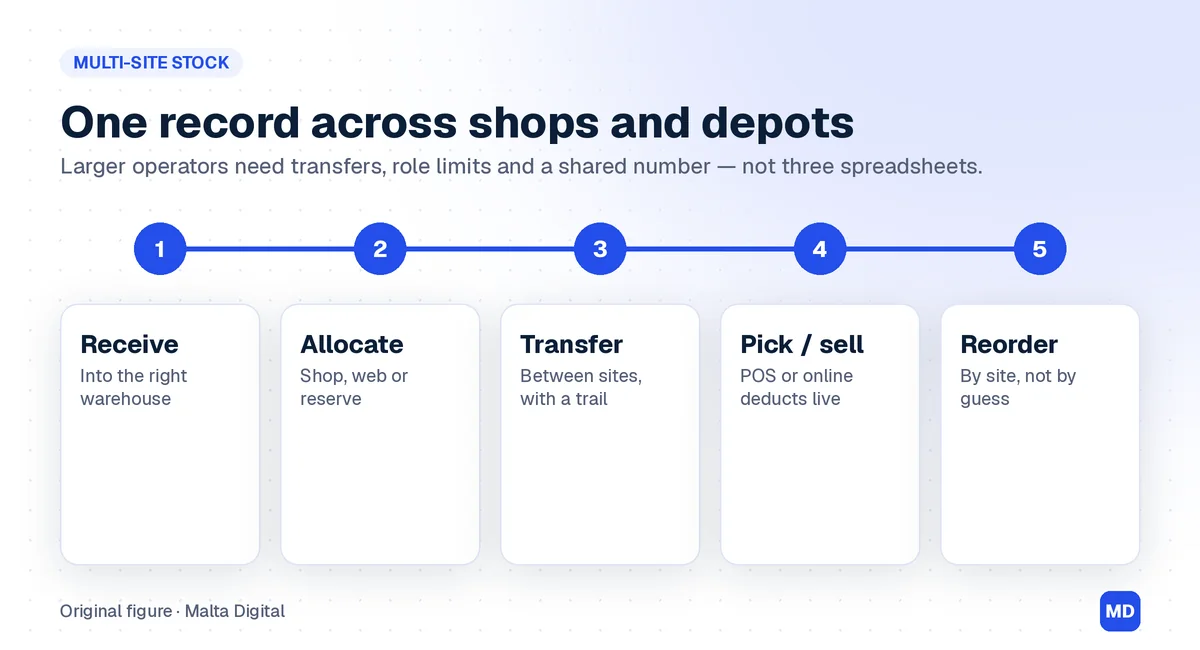
Multi-warehouse support means each unit has a home. Receiving books stock into the right site. Allocation decides what the shop, the website or a reserved order may sell. Transfers move goods with a trail, so a Gozo depot cannot lose a box that a Valletta manager later needs. Picking and POS deduct the same record. Reorder points can differ by site, because a depot and a boutique do not run down at the same speed.
Roles matter as much as locations. Sales staff may view availability without adjusting counts. A store lead can receive and transfer. Finance can see value and shrinkage without editing quantities. Larger groups add approval on adjustments above a set amount, so a typing error does not rewrite the company’s stock value.
If you handle customer details next to stock, for example named reserves or delivery addresses, that is personal data. The IDPC is the authority in Malta. Limit who can export customer-linked stock records, and keep them only as long as the order needs.
Connections and migration
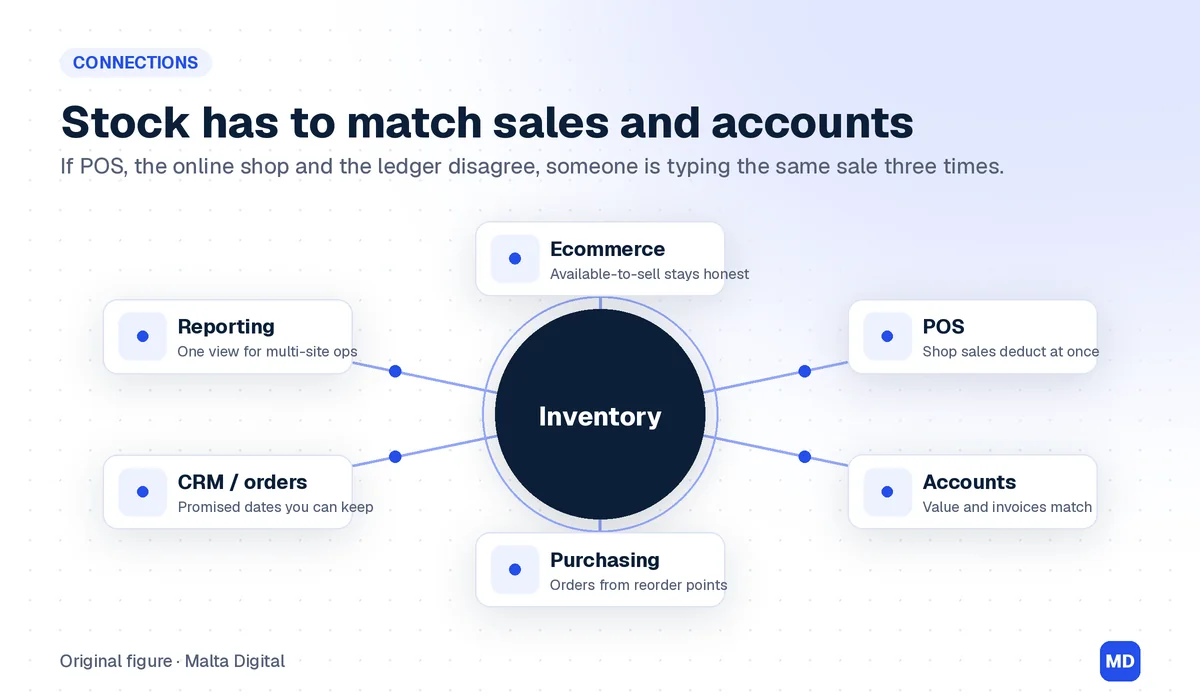
The system only works if sales and stock move together. Ecommerce should show what you can actually ship. A POS sale should deduct at once, not at closing time. Accounts should see stock value that matches physical counts often enough to trust it. Purchasing should raise orders from reorder points, not from a weekly panic.
Migration is where projects slip. Plan a freeze window, a count, and a mapping from old codes to new ones. Bring opening balances by site, not as one dumped total. Keep the old export until the first month’s counts agree. Enterprise teams also need a cutover plan for each till and each warehouse, plus a fallback if a site cannot go live on the same morning.
Reporting should answer operational questions, not only year-end value. Useful views include fill rate, dead stock, items below reorder point, transfers in progress, and shrinkage by site. Directors of a multi-site group should see one page, then drill into a branch without exporting four sheets.
Tell us how you sell, store and reorder today. We will say whether a product, a custom build or a mix is the honest fit.
Worked EXAMPLE
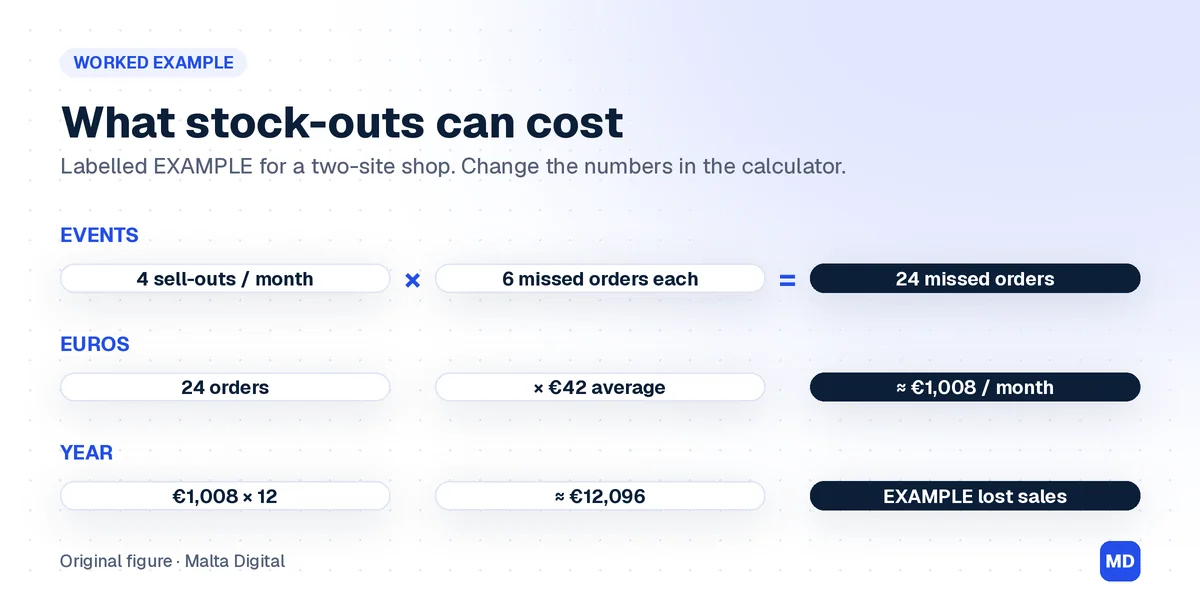
EXAMPLE: a two-site shop sells out of a popular line 4 times a month. Each time, about 6 customers leave or order elsewhere. The average missed order is €42. That is 4 × 6 × €42 = about €1,008 in missed sales each month, or about €12,096 a year. The calculator below uses the same sum with numbers you type.
Estimate missed sales when items are unavailable. Load the labelled EXAMPLE or type your own figures. Nothing leaves this page.
Without JavaScript: monthly missed sales = sell-outs × missed orders × average order value. Yearly = monthly × 12.
This is lost sales, not profit, and it ignores emergency purchases and staff time. Still, it shows why “we kind of know what we have” is expensive. A system that prevents even part of that leak often pays for itself in avoided apologies, not in extra features.
If you are an SME looking at funding, Digitalise your SME on fondi.eu can part-finance digitalisation. Cut-off dates checked on 8 November 2026 are 13 November, 30 November and 14 December 2026. The next cut-off is 13 November 2026. Eligibility is decided by the funding body, not by us. Read the grant page before you plan around a date.
Proof
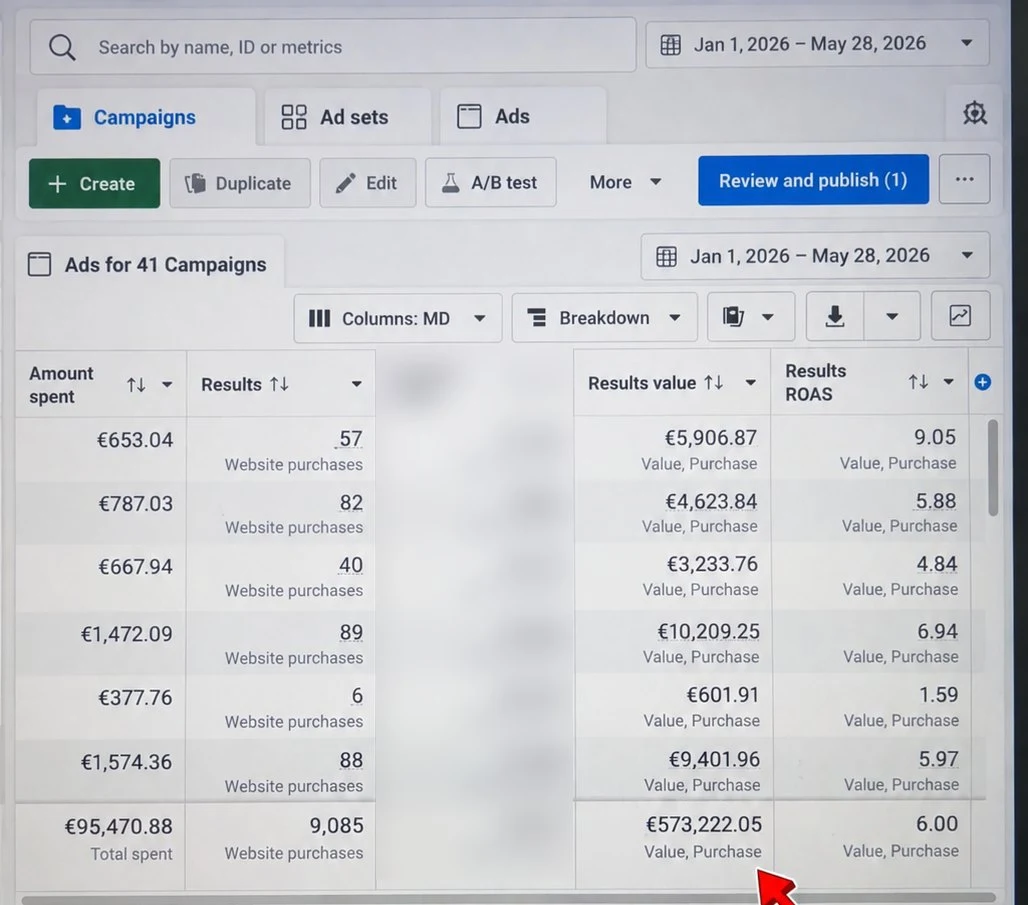
Inventory is the unglamorous half of selling well. Malta Digital’s e-commerce advertising work includes a tracked period from 1 January to 28 May 2026: €95,470.88 spent across 41 campaigns, €573,222.05 in tracked sales, and a ROAS of 6.00. Those sales still needed stock behind them. A shop that cannot fulfil what ads promise gives the revenue back as refunds and wasted spend.
Want stock, sales channels and accounts telling the same story? Apply now for a business system
A few straight answers
It is software that tracks how much of each item you have, where it sits, what moved, and when you should reorder. A warehouse management system goes further into receiving, put-away and picking tasks.
Choose ready-made when your receiving, picking and channels look standard. Choose custom, or a mix, when kits, unusual POS, multi-site rules or a private sales process force people back into spreadsheets.
Yes, if it is designed that way. You need transfers between sites, allocation rules and roles so a shop cannot silently edit a depot’s count.
It should. Ecommerce, POS and accounts must share the same available-to-sell number. If they do not, someone is typing the same sale more than once.
Digitalise your SME on fondi.eu can part-finance digitalisation, including systems. Cut-off dates checked on 8 November 2026 are 13 November, 30 November and 14 December 2026, with the next cut-off on 13 November. The funding body decides eligibility. See our Digitalise your SME guide.
Malta Digital custom business systems start from €7,500, per project after scoping. Price follows sites, integrations, migration and the reports you need. We do not quote a catalogue price before that mapping.
Keep reading
How a custom build is scoped, designed, tested and handed over, in plain steps.

When a ready-made product is enough, and when your process needs something built around it.
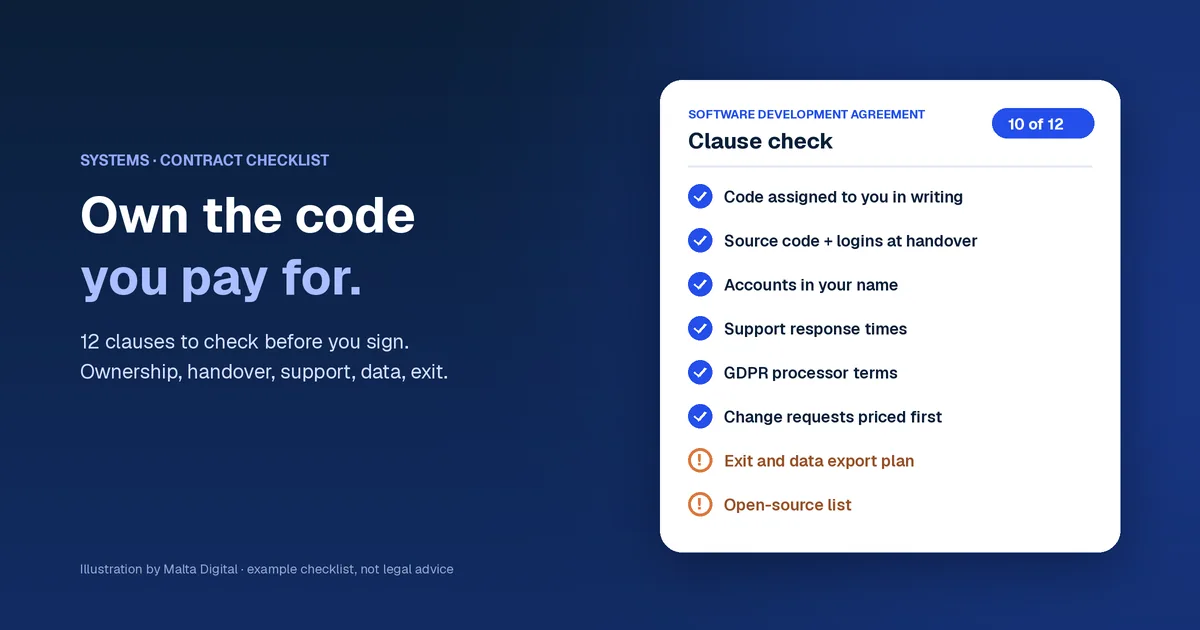
What to agree in writing on ownership, handover, support and data before a build starts.
A useful first step
Describe your sites, sales channels and where stock numbers go wrong. We will map a first version and quote after scoping.
Step 1 of 3
A few quick questions, about a minute. We usually reply within 2–3 hours.