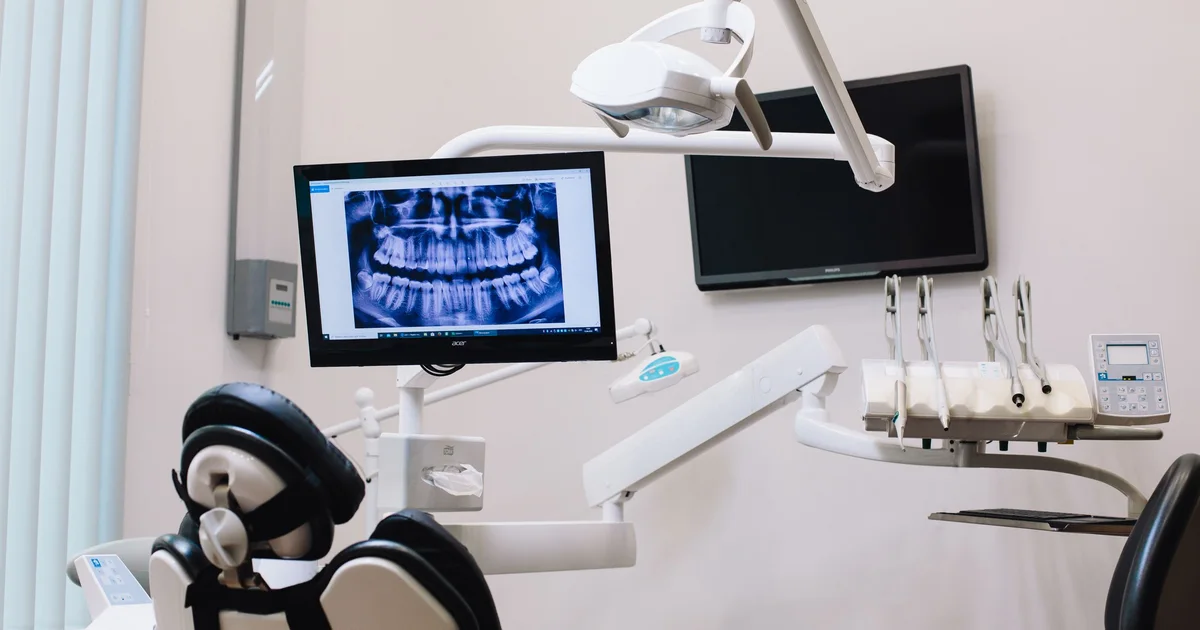
CRM for clinics
Enquiries to booked patients, treatment plan follow-up, recalls and reviews, with health data kept safe and clinical notes out of the CRM.
Websites · Clinics
Before ringing a clinic, many people look it up on their phone. They want to know if you treat their problem, who they will see, where you are, when you are open and how quickly they can get an appointment. A clinic website that answers those questions in a few taps fills the diary. One that hides them sends people to the next clinic on Google Maps. This guide covers what a dental, medical, physio or aesthetics clinic website in Malta needs: the pages, online booking, doctor profiles that stay within the Medical Council’s advertising rules, forms that treat health data with care, languages and Google Maps. Rules were checked against the official sources on 30 October 2026.

Book online · new patient
Check-up and hygiene
Practitioner: Not sure, help me choosePreferred time: Tue morningRequest appointmentA clinic website in Malta should answer four questions in a few taps: do you treat my problem, who will I see, where and when, and how do I book. That means one page per treatment, doctor profiles that follow the Medical Council’s advertising rules, booking linked to your diary, short forms that protect health data, the right languages and a footer with your professional details. Malta Digital builds clinic websites from €990, excluding VAT.
The problem
Many clinic websites open with a welcome message and a photo of the building, then make people hunt for the things they actually came for. Opening hours sit on one page, the phone number on another, and the only way to book is to call during the hours when reception is busiest.
Patients are not judging your website on design awards. They are checking four things: can this clinic help with my problem, who will I see, can I get there, and how do I book. Every page should help one of those, and the booking button should never be more than a thumb away.

The pages
Home. What you treat, where you are, your hours and a booking button, all visible on a phone without scrolling far.
One page per main service or treatment. A page for check-ups and hygiene, one for implants, one for sports physio, one for paediatrics. Say what it is, who it is for, what happens at the appointment, how long it takes and, if you choose to publish them, prices. One clear page per treatment is easier for patients and for Google than one long list.
The team. A profile for each doctor, dentist or therapist, with their qualifications and what they focus on. More on the rules below.
Fees and insurance. If you publish prices, say clearly whether they include VAT, and which insurers you work with, if any.
Contact and location. Address, a map, parking or bus tips, accessibility, phone, WhatsApp and email.
Privacy notice and the legal details in the footer, covered further down.
Online booking
There are three ways to put booking on a clinic website, and the right one depends on the software you already use.
Link or embed the booking from your practice software. If your clinic system already offers online booking, the website should make it the main button, styled to match, so patients book straight into the real diary.
A booking request form. The patient chooses the service, a practitioner or “not sure”, and a preferred time, and reception confirms. This suits clinics where the right slot depends on the case, such as a first consultation or a referral.
A custom booking flow with live availability across several practitioners, deposits or reminders. That is a booking system rather than a website feature, and we cover how to choose one in our booking systems guide.

Whichever you choose, keep it short. Ask for what you need to book and nothing more, show the phone and WhatsApp next to the form for people who prefer to talk, and send a confirmation so nobody wonders whether it worked.
Doctor profiles
Doctors and dentists in Malta are bound by the Ethics of the Medical Profession Regulations (S.L. 464.17), and these apply to what a clinic says about them online. The good news is that the rules allow what patients need: factual information about the services you offer.
In plain terms, the regulations say information must be true and checkable, not misleading, sensational or vulgar, and presented discreetly. A notice in a public medium may give the practitioner’s name, the qualifications registered with the Medical Council and a title describing the type of practice. “Specialist” is only for people on the Medical Council’s Specialist Register, and “consultant” only for those who hold or held that appointment. The rules also rule out testimonials or endorsements of a practitioner’s clinical skills, claims that one doctor is better than others, and anything that plays on a patient’s fears or vulnerability.
So a strong profile is a real photo, the name, registered qualifications, the languages they speak, the services they focus on and the days they are in. Patients can check registration themselves on the Medical Council’s public registers, and some clinics link to them. Physiotherapists, nurses and other professions have their own councils and rules, so check those for your team.
| What you want to put on the site | Allowed? | Rule in S.L. 464.17 |
|---|---|---|
| Name, qualifications registered with the Medical Council, type of practice | Yes | Reg. 8(6) |
| Factual information about the services you offer | Yes, if true, checkable and not misleading | Regs 5 and 6 |
| “Specialist” in a title or profile | Only if on the Specialist Register | Reg. 8(8) |
| “Consultant” | Only if they hold or held that appointment | Reg. 8(8) |
| Testimonials or endorsements of a practitioner’s clinical skills | No | Reg. 6 |
| Saying one doctor is better than others, or sensational claims | No | Reg. 6 |
| Recall reminders to patients | Only with the patient’s prior written agreement | Reg. 13(2) |
Treatments and claims
Treatment pages are where a clinic website can cross a line without meaning to. Describe the treatment, who it may suit, what happens, recovery and risks in plain words. Avoid guarantees, “painless”, “best in Malta” and before-and-after galleries built to persuade rather than inform. Patient reviews that praise a dentist’s skill are a testimonial in all but name, so think carefully before putting them on treatment pages.
Aesthetic clinics have one more rule to watch. Botulinum toxin products, such as Botox, are prescription-only medicines in Malta, and the Medicines Authority says prescription-only medicines cannot be advertised to the public, including on websites and social media. That covers brand names, testimonials and before-and-after photos for them. Describe the treatment area and the consultation in general terms instead, and let the doctor discuss options in person.
Forms and health data
A booking request that says “toothache, lower left” or “follow-up after knee surgery” is health data, and GDPR treats it as a special category that needs extra protection. Your website is often the first place that data is collected, so the form needs to be built with that in mind.
Ask less. Name, phone or email, the service and a preferred time are enough to book. If you add a “reason for visit” box, keep it optional and short, and never ask for medical history on a website form.
Send it safely. The site should run on HTTPS, and form entries should go to a clinic system or a business email account with access control, not a personal inbox. Where a booking or form tool stores the data, choose one with EU hosting and a data processing agreement.
Tell people what happens to it. Link a privacy notice next to the submit button that says who you are, why you need the data and how long you keep it.
Keep marketing separate. A booking is not a yes to newsletters. Malta’s medical ethics rules allow recall reminders only with the patient’s prior written agreement, so ask for it clearly and keep a record. We also keep treatment details out of the analytics and ad tracking on booking pages.
Apply now and tell us what kind of clinic you run, which treatments you want more of and how patients book today. We’ll show you the pages and booking route we’d build, or message us on WhatsApp.
Languages
English and Maltese are both official languages, and depending on where you are, your patients may also include Italian, Spanish or Arabic speakers, residents and visitors. Decide your languages from your own appointment book rather than adding a dozen machine-translated versions.
Each language should have its own pages and address on the site, such as /mt/ or /it/, a clear switch, and a translation checked by someone who speaks the language well, especially for treatment and aftercare pages. A wrong word in aftercare instructions is not a small thing. If a practitioner speaks a language, say so on their profile: it is one of the most useful facts a patient can find.
Google Maps
Many new patients find a clinic on Google Maps first. Google’s guidelines let individual practitioners, such as doctors and dentists, have their own Business Profile, and they may include a title such as “Dr”. When several practitioners work at one clinic, the clinic has its own profile and each practitioner’s profile carries only their name.
Keep the clinic’s name, address, phone and hours exactly the same on the website, the Google profile and your signs, and link each profile to the right page: the clinic profile to the homepage, a practitioner’s profile to their profile page.
The footer
Malta’s Electronic Commerce Act says a business website must make certain details easy to find, all the time: the business name, address, email and other contact details, the company registration number and VAT number where they apply. Clinics have one more set, because medicine and dentistry are regulated professions: the professional body, such as the Medical Council Malta, the professional title and the country that granted it, and a reference to the professional rules with a link to them. If your clinic needs a licence or authorisation to operate, name the authority that supervises it.
Put these in the footer of every page and on the contact page. Our website legal checklist covers the rest, from cookie consent to the privacy notice.
Proof
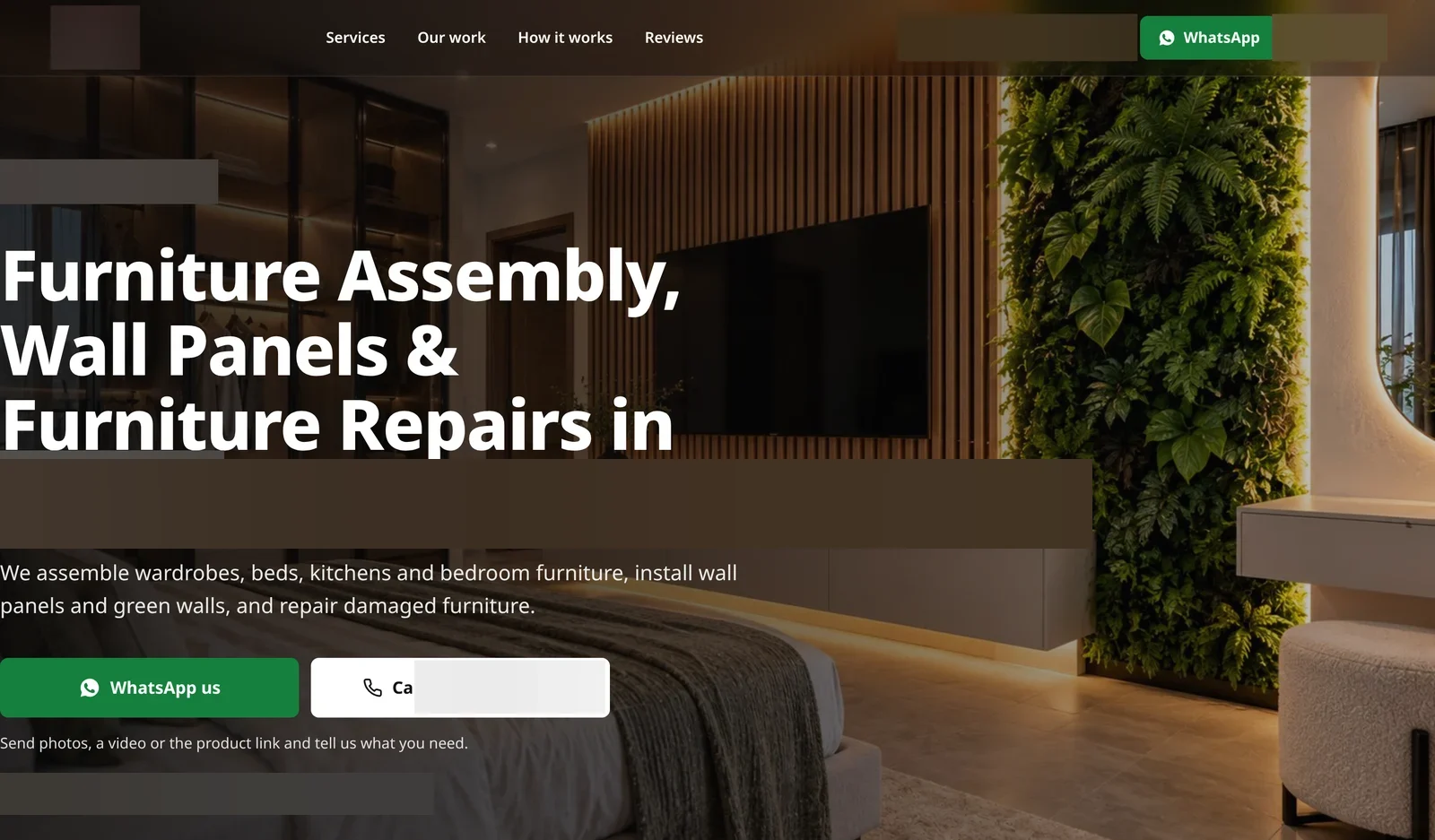
A furniture assembly and installation business came to us with no website, a Facebook page with an empty intro and 858 views in the previous 28 days. We built a mobile website made for quotes on WhatsApp, rebuilt their Facebook and Instagram, and ran Meta ads that open a WhatsApp chat or a phone call.
In the first 28 days, Facebook views went to 154.1K, and €346.75 of ad spend brought 395 WhatsApp taps, 10 phone calls and 1,158 page visits. The website was the place every one of those people landed, so it had to load fast on a phone and make the next step obvious.
Want a clinic website that turns searches into booked appointments? Message us on WhatsApp
How we do it
We start with your appointment book, not a template: which treatments you want more of, which practitioners have space, how you take bookings today and which languages your patients speak. Then we plan one page per main treatment, write or edit the copy with you so it stays factual, build the booking route into your existing software or a request form, and set up the footer, privacy notice and cookie consent. Your practitioners check the wording on their profiles and treatment pages before anything goes live.
Most clinic websites fit our Business Website from €2,490 or Growth Website from €4,900, excluding VAT. A small practice with a few pages can start from €990. If you need live multi-practitioner booking, patient logins or a CRM, we scope that as a custom system.
A few straight answers
With us, from €990 excluding VAT for a small practice site. Most clinics with several treatments and practitioners fit the Business Website from €2,490 or the Growth Website from €4,900. Custom booking systems are quoted separately.
Be careful. Malta’s medical ethics rules for doctors and dentists do not allow testimonials or endorsements of clinical skills. Reviews that praise a practitioner’s skill can count, so check with the Medical Council or your adviser first.
Only if they are on the Medical Council’s Specialist Register. “Consultant” is only for those who hold or held a consultant appointment.
No. Botulinum toxin products are prescription-only medicines, and the Medicines Authority says these cannot be advertised to the public, including on websites and social media. Describe the treatment area and the consultation in general terms.
Yes. Link or embed the booking from your practice software, use a booking request form the clinic confirms, or add a custom booking system for live availability across practitioners.
Often, yes. A reason for visit or a treatment name can reveal health information, so ask only what you need, send it securely, store it with EU-hosted tools and link a clear privacy notice.
Yes. Websites, Meta ads and custom systems are separate services. Our guides on CRMs for clinics and Facebook ads for clinics cover those sides.
Keep reading
Enquiries to booked patients, treatment plan follow-up, recalls and reviews, with health data kept safe and clinical notes out of the CRM.

Features that matter, deposits and reminders, client records and privacy, ready-made vs custom.
Meta’s health ad rules, Malta’s medical advertising rules, lead forms and follow-up.
A useful first step
One page per treatment, doctor profiles within the Medical Council rules, booking into your diary and forms that protect health data. From €990, excluding VAT; most clinics fit the €2,490 or €4,900 package.