
Web design in Malta: a guide
What a good business website in Malta needs, what it costs and how to choose a web designer.
Websites · Online stores
An ecommerce website in Malta needs five things to sell: product pages that answer every question, a fast mobile checkout with cards and Apple Pay or Google Pay, clear delivery options for Malta and Gozo, the legal basics (prices with VAT, returns, privacy and cookies), and tracking so you can see which ads and pages bring sales. For most small shops a well set-up Shopify or WooCommerce store is the right start; a custom build makes sense when your products, pricing or stock work in a way off-the-shelf tools cannot handle.

The short answer
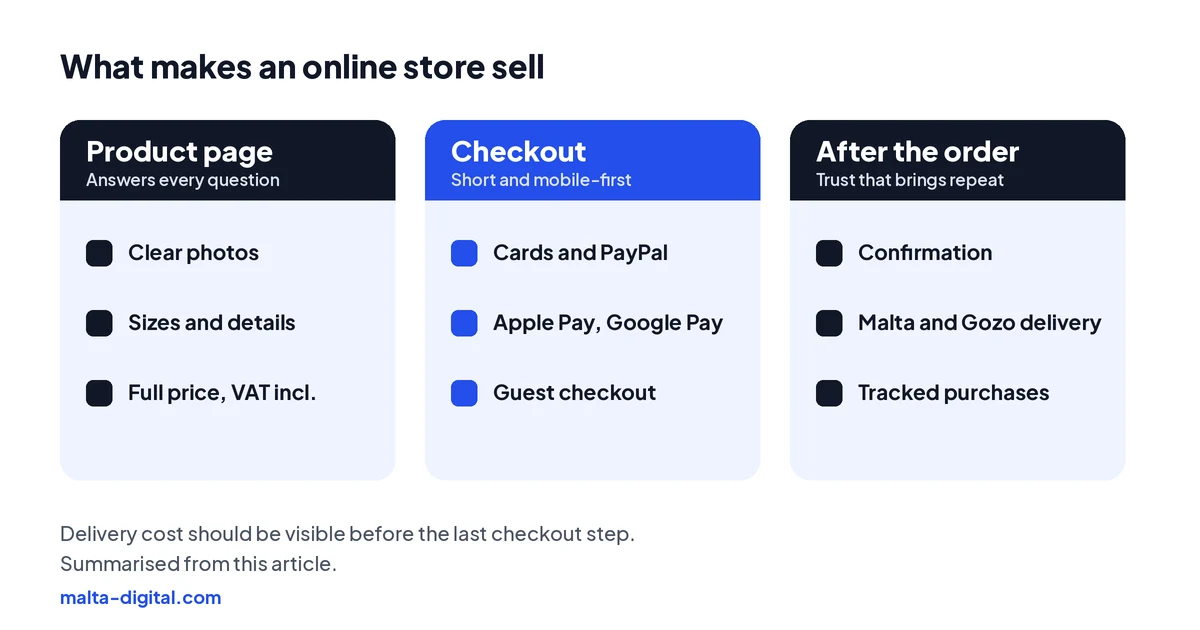
An online store is not a brochure website with a “buy” button added. It is a small business system: a product catalogue, a cart and checkout, payments, stock, delivery, emails that confirm and update each order, and a back office where you see what to pack today. If any of those parts is weak, people still visit, but they do not buy.
Most Maltese shoppers already buy online from big international stores, so they compare you with the best checkout they have used this week. They expect clear photos and sizes, the full price before checkout, a delivery date they can trust and a payment method they already use on their phone. Meeting that standard matters more than a clever design.
The right starting question is not “which platform?” but “how do we sell?”: how many products, how often stock changes, whether you deliver, ship or offer click-and-collect, and whether you sell only in Malta or across the EU.
Platforms
Shopify is a hosted platform: you pay a monthly plan and transaction or payment fees, and Shopify handles hosting, security and updates. It is quick to launch and hard to break, which suits most small shops. Shopify Payments is available to businesses in Malta, subject to Shopify’s verification, so you can take cards without a separate gateway. The trade-off is ongoing fees and less control over how some things work.
WooCommerce is a free plugin for WordPress, hosted wherever you choose. It gives you more control and no platform fee, but you are responsible for hosting, updates, backups and plugin conflicts. It suits shops that already run WordPress, sell content-heavy products or need a feature that is easier to add with a plugin.
A custom store is built around your business: unusual pricing (made-to-measure, quotes, trade accounts), complex stock across several locations, a booking element, or a connection to an existing system. It costs more to build and needs a proper specification, but it removes the workarounds that otherwise eat your team’s time. The common mistake is choosing on the monthly fee alone instead of on the total cost of running the shop each week.
| Shopify | WooCommerce | Custom | |
|---|---|---|---|
| What it is | Hosted platform, monthly plan | Free WordPress plugin, your hosting | Built around how you sell |
| Upkeep | Handled for you | Updates, backups, plugins: yours | Your developer, on a support plan |
| Costs | Plan plus payment fees | Hosting, plugins, upkeep time | Higher build, fewer workarounds |
| Best for | Most small shops | Shops already on WordPress | Quotes, trade prices, complex stock |
Payments
Offer the methods people already use: Visa and Mastercard, Apple Pay and Google Pay on mobile, and PayPal for those who prefer it. Shopify Payments, Stripe and local bank gateways all work for Maltese businesses; pick one that settles to your euro business account and supports Strong Customer Authentication, which EU card payments require.
Keep the checkout short. Ask only for what you need to deliver the order, allow guest checkout, and show delivery cost before the last step. A surprise delivery fee on the final page is one of the most common reasons people leave a cart.
If you sell high-value or made-to-order items, consider a deposit or a “request a quote” flow instead of full payment upfront. A furniture or kitchen business in Malta often sells better with a quote builder and a WhatsApp follow-up than with a cart.
Delivery
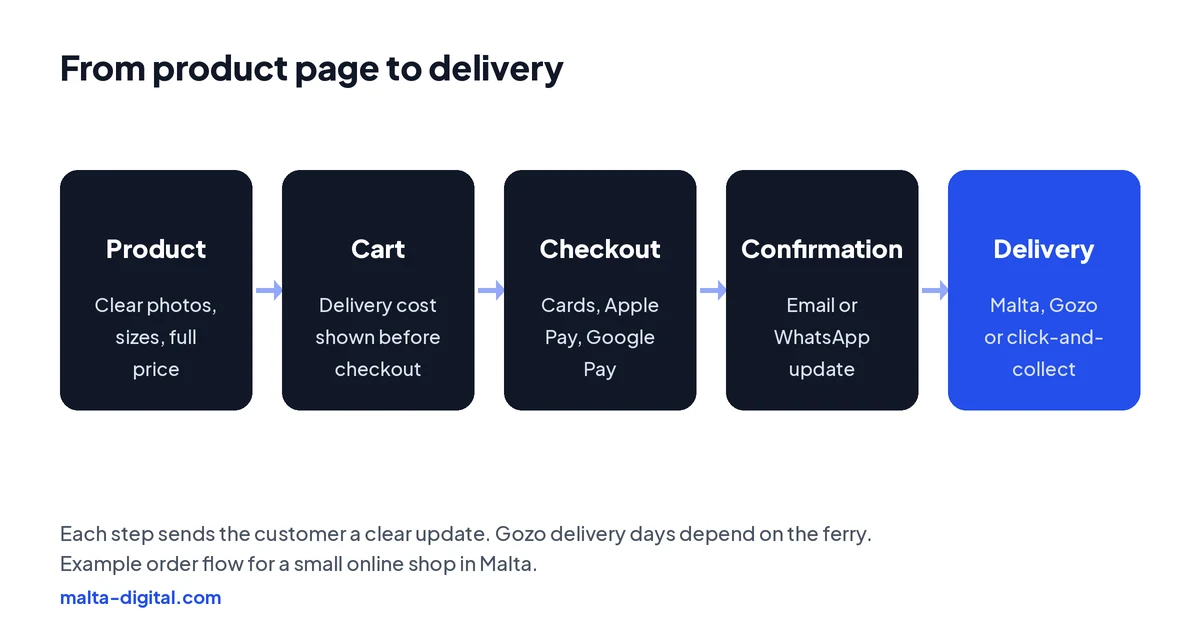
Delivery is where a Malta shop can beat international stores. Customers like next-day or same-day delivery, a choice of time slot and the option to collect. Be specific on the product page and at checkout: which days you deliver, the cut-off time for next-day delivery, and how Gozo orders are handled, because Gozo deliveries depend on the ferry and are often grouped on set days.
Set up delivery zones and rules in the store instead of handling them by message. Free delivery above a basket value, a flat fee for Malta, a separate rate for Gozo and free click-and-collect is simple for customers and easy to run.
Send a WhatsApp or SMS update on the day of delivery. Most Maltese customers would rather get a message than a missed courier, and fewer failed deliveries means fewer costs and complaints.
The legal basics
Show prices including VAT to consumers; Malta’s standard VAT rate is 18%, with reduced rates for some goods. If you sell goods to consumers in other EU countries and your total EU cross-border sales pass €10,000 a year, you charge the VAT of the customer’s country, usually declared through the EU One Stop Shop. Talk to your accountant before you open EU delivery.
Online shoppers in the EU generally have 14 days to cancel and return goods without giving a reason, with some exceptions such as made-to-measure or perishable items. Your store needs clear terms, a returns process, your business details and a privacy notice. Malta’s consumer authority is the MCCAA, and personal data falls under GDPR, overseen by the IDPC.
Tracking tools such as the Meta Pixel and Google Analytics need cookie consent before they run. Also note the European Accessibility Act, which has applied to online shops since 28 June 2025, with an exemption for micro-enterprises with fewer than 10 staff and no more than €2 million turnover. Building an accessible store from the start is easier and better for every customer.
See it working
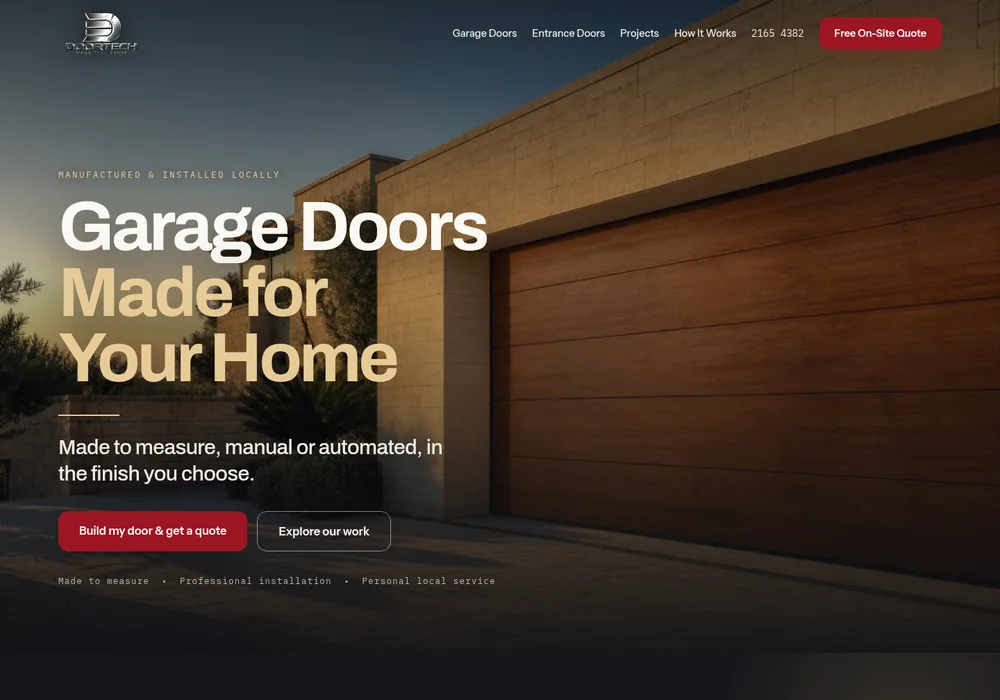
Two of our demos show the store side: a boutique shop with brands and fitting bookings, and a made-to-measure product site where customers build a quote instead of using a cart.

Want an online store your customers find easy to buy from? Message us on WhatsApp
Tell us on WhatsApp what you sell and how you deliver. We’ll suggest the platform, checkout and delivery setup that fits, and give you a price range.
Getting sales
A new store gets very few visitors on its own. Plan where the first customers will come from: Instagram and Facebook ads for products people buy on impulse or as gifts, Google for products people search for by name, and your existing customers by email and WhatsApp. In Malta, a small, steady ad budget aimed at the right people usually beats a big launch push.
Tracking has to be right before you spend on ads. Install the Meta Pixel and Conversions API so purchases are counted with their value, connect Google Analytics, and test a real order end to end. Then you can see which ads and products bring sales instead of guessing.
Proof
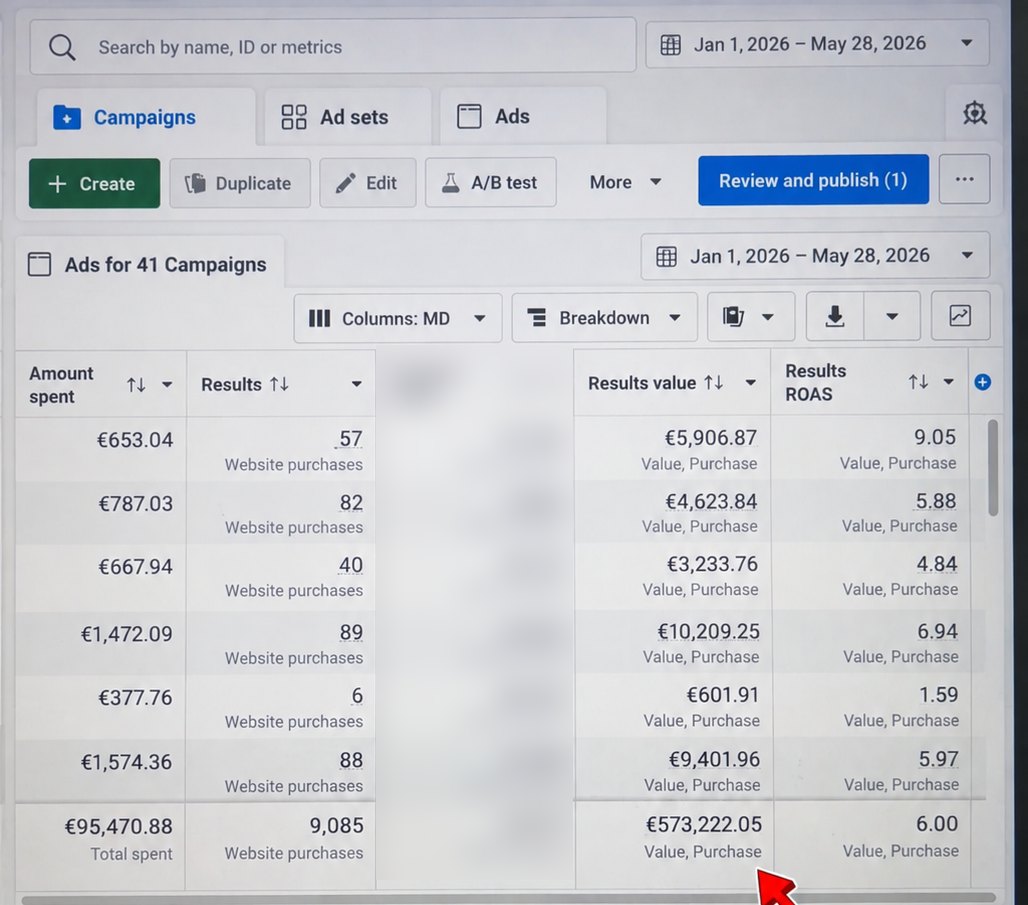
From 1 January to 28 May 2026, an online store we ran ads for spent €95,470.88 on Facebook and Instagram. Meta Ads Manager tracked 9,085 website purchases worth €573,222.05, an average ROAS of 6.00.
Want your online store to sell like this? Contact us
Cost
The cost depends on the number of products, how much content you need written and photographed, the platform, and what the store must connect to, such as stock, accounting or a booking system. Agencies in Malta publish online store packages starting at a few thousand euros, and custom stores cost more. On top of the build, budget for the platform or hosting, payment fees, apps or plugins, and someone to keep products and stock up to date.
Our focused website from €990, excluding VAT, does not include a shop; online stores are scoped separately and we quote them after a short call. A store may be partly covered by grant schemes when it adds real digital functionality; check the rules first in our grant guide.
How we do it
We start with how you sell today: products, stock, delivery, payments and where your customers come from. Then we recommend the platform that fits, plan the product pages and checkout, set up payments, delivery zones for Malta and Gozo, emails and WhatsApp updates, the legal pages and cookie consent, and connect tracking before launch. We test real orders on phones before anything goes live.
Because we also run Facebook and Instagram ads, we build stores to sell from the first ad: fast product pages, a short checkout and purchases tracked with their value. Our web design page shows more of our work.
A few straight answers
It depends on products, platform and connections. Malta agencies publish store packages from a few thousand euros; we quote online stores after a short call. Our €990 website does not include a shop.
Shopify is quicker to launch and easier to run; WooCommerce gives more control without a platform fee but needs more maintenance. Custom suits unusual pricing or stock.
Yes. Shopify lists Malta as a supported country for Shopify Payments, subject to its business verification.
Show consumer prices including VAT. Once your cross-border sales to consumers in other EU countries pass €10,000 a year, you charge their country’s VAT, usually via the One Stop Shop.
EU consumers generally have 14 days to cancel online purchases without a reason, with exceptions such as made-to-measure or perishable goods.
Set a separate Gozo delivery rate and days in your store, since Gozo deliveries depend on the ferry. Offer click-and-collect and send delivery-day updates.
Keep reading
What a good business website in Malta needs, what it costs and how to choose a web designer.
What a small business website in Malta should include, what it costs and how to get one live fast.

Cost, speed, control, maintenance and SEO compared, and when each option makes sense.
A useful first step
We build online stores with a fast mobile checkout, delivery for Malta and Gozo and purchase tracking, then help you get the first sales with ads. Quoted after a short call.