1 Jan – 28 May 2026
€95,470.88 in Meta ad spend. €573,222.05 in tracked sales.
Tracked in Meta Ads Manager.
Facebook & Instagram ads · E-commerce
For an online shop, Facebook and Instagram ads work best with three parts: campaigns that find new customers, ads that bring back people who viewed products or left a basket, and offers for past customers. All three depend on accurate purchase tracking with the order value. Judge results by profit after ad spend, not by clicks.
By Malta Digital · Published · Updated · 5 min read
Start with tracking
For e-commerce, tracking is the foundation. Meta needs to know which people bought and how much they spent, so it can find more buyers like them.
Check whether the order value sent to Meta includes VAT and delivery. Either is fine, but you need to know which, so you compare results with your own figures properly.
Product catalogue
A catalogue is a feed of your products, with names, prices, images, links and stock status. Shopify, WooCommerce and most shop platforms can sync it to Meta automatically.
With a catalogue connected, Meta can show each person the products they viewed, or products similar to them, in a single ad that updates itself. These catalogue ads are often the most efficient part of an online shop’s account.
The structure
Broad audiences with strong product video and images. Let Meta find buyers, guided by your purchase data.
Catalogue ads for people who viewed products or added to basket but did not buy.
New arrivals, bundles and seasonal offers for people who bought before.
Keep testing new images, videos and angles. Creative is the biggest lever you control.
Meta’s automated sales campaigns (Advantage+) can combine finding new customers and retargeting in one campaign. They work well once you have steady purchase data. Smaller shops often start simpler.
Retargeting
Most visitors leave an online shop without buying. Retargeting reminds them, and it is often where the best return comes from.
Show the products they looked at, with a reason to come back such as reviews or delivery information.
The warmest audience. Remind them quickly, while the decision is still fresh.
Often a doubt about delivery cost, timing or payment. Answer it in the ad.
Small retargeting audiences see ads often. Refresh the creative so reminders do not become irritating.
Ads are not the only reminder. Basket-recovery emails from your shop platform work alongside them and cost far less.
Creative
Video of someone using, wearing or unboxing the product beats a plain packshot.
Size, fit, materials, delivery time, returns. Put the answers in the ad.
Real reviews and photos from customers, with permission.
Free delivery over a set amount, a bundle or a launch offer. One offer per ad.
Measuring
Tracked sales value divided by ad spend. Useful, but it ignores your margins.
Gross profit on the orders, minus ad spend and fees. The number that matters.
Bundles and free-delivery thresholds can raise it, which makes every sale more valuable.
Customers who buy again make the first sale’s ad cost worth more.
Malta specifics
Local customers expect quick delivery. Say clearly how long it takes, including to Gozo.
If you ship to other EU countries, set up separate campaigns per market, with prices and delivery times for each.
Consumers in the EU should see the final price including VAT. Malta’s standard rate is 18%.
Familiar payment options, a local address and clear returns help smaller local shops compete with large marketplaces.
Seasons
Black Friday and Christmas. Competition for attention is high, so prepare creative and offers early and build audiences in October.
Visitors, outdoor and travel products. Residents’ routines change in the hottest months.
The school year starts. A busy time for children’s products, stationery and routines.
A good time to test new creative and products while attention is cheaper.
Delivery times matter around holidays. Say clearly when the last order date is for delivery before Christmas, in Malta and in Gozo.
Common mistakes
Results
These are results from campaigns we manage, including e-commerce, tracked in Meta Ads Manager.
1 Jan – 28 May 2026
Tracked in Meta Ads Manager.
2025
Tracked across the year in Meta Ads Manager.
1–9 June 2026
Nine days of campaigns, tracked in Meta Ads Manager.
Platform-attributed purchase value is not profit. These examples are not a guarantee of future results.
A few straight answers
Accurate purchase tracking, a connected catalogue, campaigns to find new customers, catalogue ads for people who viewed products, and offers for past customers. Keep testing creative.
Not to start, but it helps. A catalogue lets Meta show each person relevant products automatically, which is often efficient for retargeting.
Either works, but be consistent and know which it is. When comparing results with your accounts, remember that VAT is not revenue for your business.
It depends on margins, prices and creative. Campaigns need time and purchase data to learn. Judge by profit after ad spend over weeks, not days.
Yes. We build websites and online shops with tracking set up, and manage the ads that bring visitors to them.
Keep reading
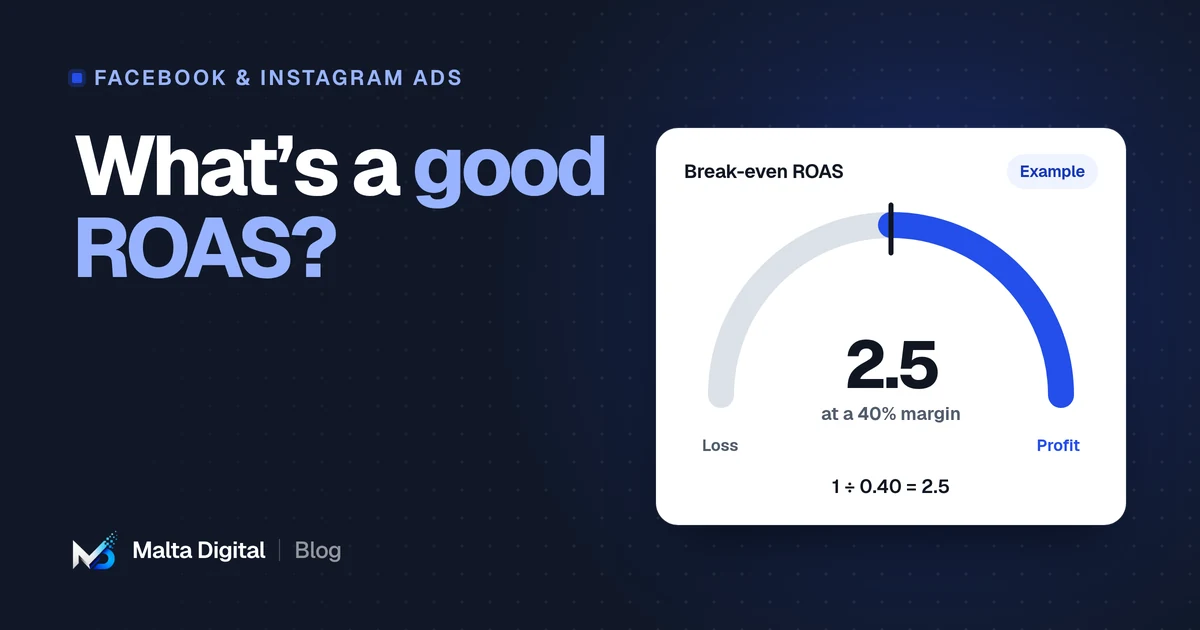
Why there is no universal number, how to work out break-even ROAS, and how VAT changes the maths.
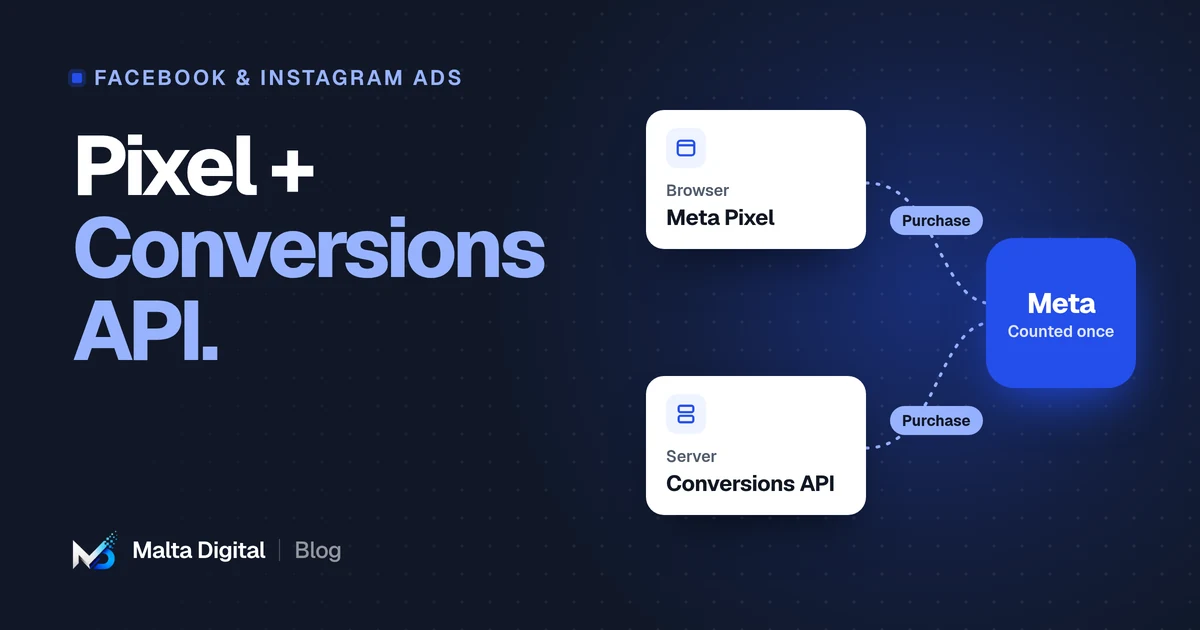
What the Pixel and the Conversions API do, why the Pixel alone misses sales, and how to check your setup.
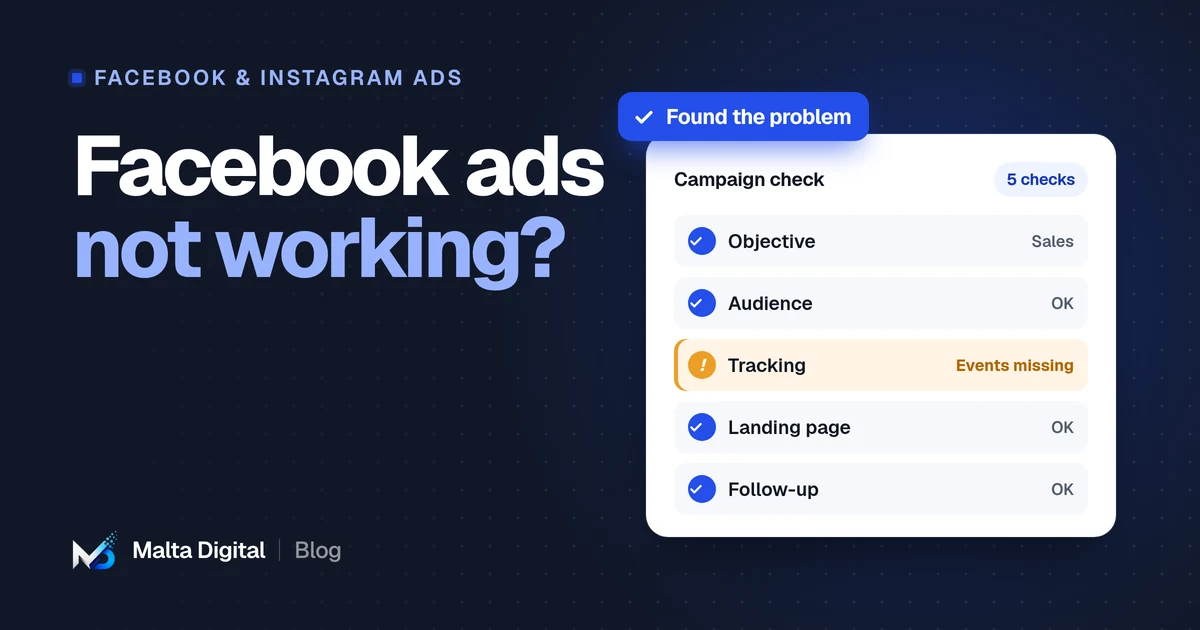
A practical checklist for ads that are not running, or running without results.
A useful first step
We’ll look at your offer, campaigns, tracking and landing page, then explain what we would change first. Initial review at no charge.