Website hosting in Malta explained
The four kinds of hosting, yearly running costs, GDPR points and a quote checker.
Websites · Security
Most small business websites are not hacked by clever people. They are hacked because a login was weak, an update was missed or nobody had a backup. This guide covers the habits that stop that, what Malta law asks of you, and a free self-check.
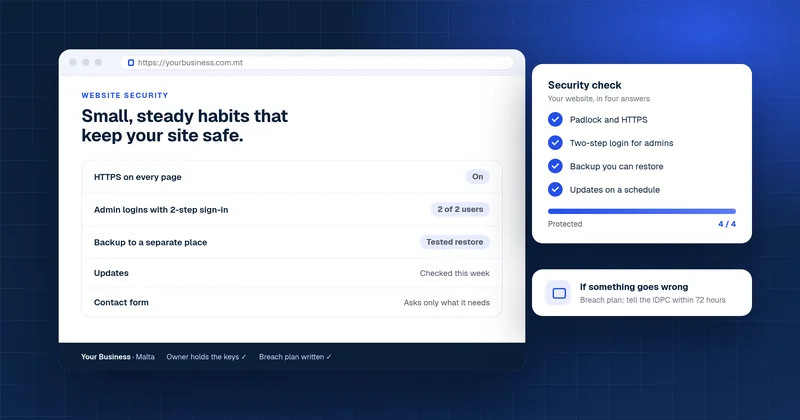
Website security for a small business comes down to five habits: HTTPS on every page, two-step sign-in for every admin login, regular updates, backups kept in a separate place, and a contact form that collects only what it needs. Malta Digital builds websites with these checks planned in from day one: see our web design in Malta service.
The problem
Many owners think, “Who would hack a small business in Malta?” Usually nobody chooses you. Automated tools scan thousands of websites a day. They look for weak passwords, old plugins and forgotten admin accounts. When they find one, they use the site to send spam, host fake pages or steal form data.
The damage is rarely dramatic. It is a warning page in Google, emails that land in spam, or a form that stopped working weeks ago. Each one costs you enquiries quietly.
The good news is that a few steady habits stop most of this. You do not need to become an expert. You need to know the five basics, who holds the keys, and what to do on a bad day.
Malta data, 2024
Eurostat asks businesses about security incidents and the measures they use. We read the latest figures, for 2024, on 8 November 2026. They cover firms with 10 or more staff.
| Measure | Malta | EU 27 |
|---|---|---|
| Had any ICT security incident with consequences | 28.7% | 21.5% |
| Services unavailable after an incident | 24.6% | 19.3% |
| Data destroyed or corrupted | 8.2% | 5.0% |
| Confidential data disclosed | 4.0% | 2.3% |
| Back up data to a separate place | 83.8% | 79.2% |
| Use two or more ways to sign in | 46.5% | 39.8% |
| Run ICT security tests | 52.9% | 34.6% |
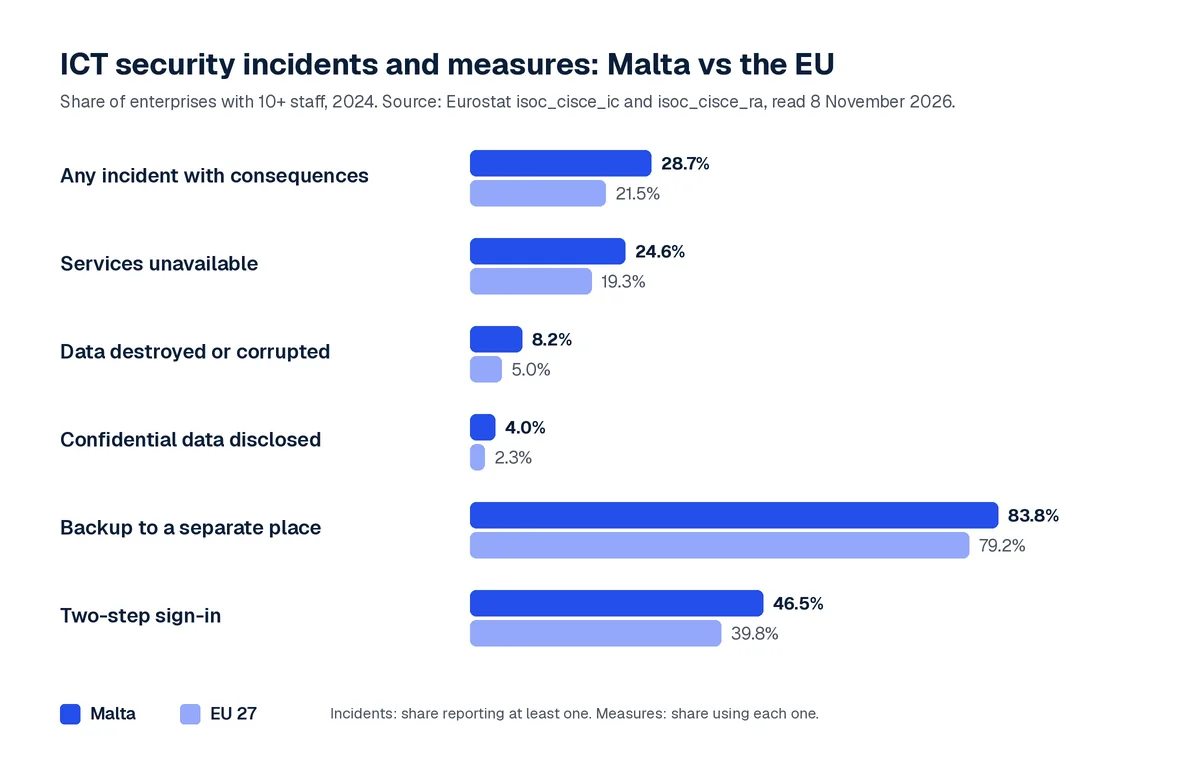
Malta firms use more security measures than the EU average, yet report more incidents. More than one in four had an incident with real consequences. And fewer than half use two-step sign-in, which is one of the cheapest fixes there is.
What to do
These five cover most of the risk for a brochure site. Shops and booking systems need a little more, which we cover below.
Want these five set up for you? Apply now for a website
Ownership
Security starts with knowing who can get in. Write down every account your website depends on, who owns it, and who has access.
| Account | Owner | Who else needs access |
|---|---|---|
| Domain | Your business | Your web designer, only if they manage settings |
| Hosting | Your business | Your web designer or host support |
| Business email | Your business | Each staff member, with their own login |
| Website admin | Your business | Each editor with their own login and only the rights they need |
| Analytics and ads | Your business | Your agency, with partner access you can remove |
When someone leaves, remove their access the same day. When a supplier changes, change the passwords they knew. Our guide to website hosting in Malta explains how to keep the domain, hosting and email in your own name.
The law
If your website collects personal data, GDPR applies. We read the regulation on EUR-Lex and the IDPC’s breach page on 8 November 2026. Four articles matter most for a small website.
| Article | What it says | What it means for you |
|---|---|---|
| Article 32 | Security that fits the risk, including the ability to restore data in a timely manner and regular testing | HTTPS, good logins, backups you have tested |
| Article 33(1) | Notify the supervisory authority without undue delay and, where feasible, within 72 hours, unless the breach is unlikely to put people at risk | In Malta, report to the IDPC through its online form |
| Article 33(2) | A processor must tell the controller without undue delay | Your host and web designer must tell you quickly |
| Article 34 | Tell the people affected when the risk to them is high | Plan the message before you need it |
The IDPC also says not every incident needs a report. Its own example is one email sent to one wrong recipient, which is unlikely to put anyone at risk. You must still assess the risk and decide. For privacy notices and cookies, see website legal requirements in Malta.
We plan HTTPS, logins, backups and a lean contact form into your scope, and you hold every key.
Free tool
Answer ten questions about your site, logins and backups. The self-check gives you a score and a fix list, most important first. “Not sure” counts as a gap, because if nobody knows, nobody is checking.
Ten questions about your website, logins and backups. Answer yes, no or not sure. You get a score and a fix list in order of importance. Nothing you click is sent anywhere.
This self-check needs JavaScript. The same ten checks are in the article, so you can go through them by hand.
The self-check follows GDPR articles 32 and 33 and the IDPC breach page as we read them on 8 November 2026. It is a checklist, not a security audit.
A bad day
Keep a one-page breach plan with these steps, the phone numbers and the IDPC link. It takes ten minutes to write and saves hours on the worst day.
Online shops
A shop holds more personal data: names, addresses, orders. Three extra habits help.
If your shop also runs ads, a security warning or an offline checkout wastes every euro you spend on them.
Proof
Here is a real result from an online store whose ads we managed. It shows how much rides on a site that stays online and secure.
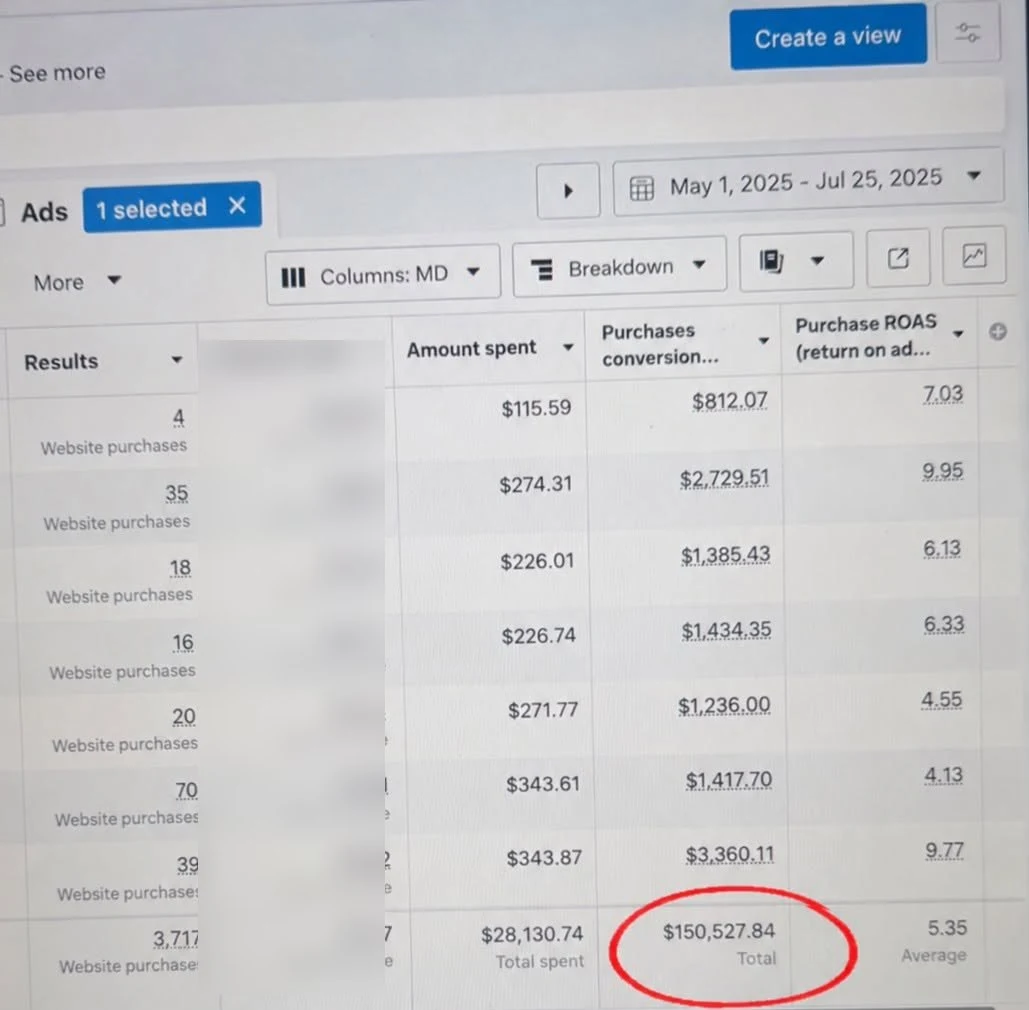
Between 1 May and 25 July 2025, the store spent $28,130.74 on Facebook and Instagram ads. Ads Manager tracked 3,717 website purchases worth $150,527.84, a 5.35 average return. That is dozens of orders a day.
At that pace, a hacked checkout or a browser warning for one weekend is not a technical problem. It is lost sales and lost trust. Security is part of the sales system, not an extra.
Want a site that is ready for real traffic and real sales? Apply now for a website
Our way
| Step | How it is often done | How we do it |
|---|---|---|
| Start date | A wait for a free slot | Work starts as soon as the first payment is made |
| First version | Weeks before you see anything | Professional Website: first version targeted within 24–48 hours once your content is ready |
| Logins | Shared admin password, held by the supplier | Each person with their own login; accounts in your business name |
| Security | Left for later | HTTPS, logins and a lean form planned in from day one |
| After launch | Unclear who updates what | Updates, backups and support agreed in writing |
| Ownership | Code and accounts with the supplier | You own the code and hold the keys |
You run your business; we take care of the website side and tell you plainly what needs doing and when.
Prices
Good security is not an expensive extra. Most of it is set-up and habits. Our website packages have published starting prices.
| Package | Price | Fits |
|---|---|---|
| Professional Website | From €990 | Up to 5 core pages, mobile design, contact form, analytics and hosting set-up |
| Business Website | From €2,490 | More services, more content and a fuller page plan |
| Growth Website | From €4,900 | A site built to support ads, with an enquiry or booking journey and a CRM connection where needed |
| Custom system | From €7,500 | Portals, booking or internal systems with user roles, quoted after a call |
Our sites are built to the same standard as this one, which scores 100 for Lighthouse Best Practices and A+ on Mozilla Observatory (checked 6 November 2026). Ongoing care is quoted separately and written into your scope. See web design in Malta or the website cost guide.
Want a secure website, set up properly from day one? Apply now for a website
A few straight answers
Five things: HTTPS on every page, two-step sign-in for every admin login, updates applied on a schedule, automatic backups kept in a separate place, and a contact form that asks only for what you need. Together they stop most common attacks. Check your own site with the free self-check on this page.
If personal data was exposed, lost or changed, and the breach is likely to put people at risk, GDPR article 33 says you must notify the IDPC without undue delay and, where feasible, within 72 hours of becoming aware of it. The IDPC has an online form. If the risk to people is high, article 34 says you must tell them too.
Yes. Most attacks are automated and scan thousands of sites for weak logins and old software. Eurostat’s 2024 data shows 28.7% of Malta firms with 10 or more staff had an ICT security incident with consequences, against 21.5% across the EU.
HTTPS encrypts the connection between your site and the visitor and shows the padlock. Browsers warn people away from sites without it. It is needed, but it is not enough on its own: it does not stop someone logging in with a stolen password.
As often as it changes. For a brochure site, daily automatic backups kept for a few weeks are usually enough. A shop or booking site needs more frequent copies. Keep them away from the live server and test a restore at least once.
You are the controller, so you deal with the IDPC and your customers. Your web designer or host is a processor and, under article 33(2), must tell you without undue delay. That is why written processing terms and clear access rules matter before anything goes wrong.
Every site we build launches with HTTPS, a lean contact form and every account in your business name. Ongoing updates, backups and support are agreed in writing in your scope, so you know exactly who does what each month.
Sources
Keep reading
The four kinds of hosting, yearly running costs, GDPR points and a quote checker.
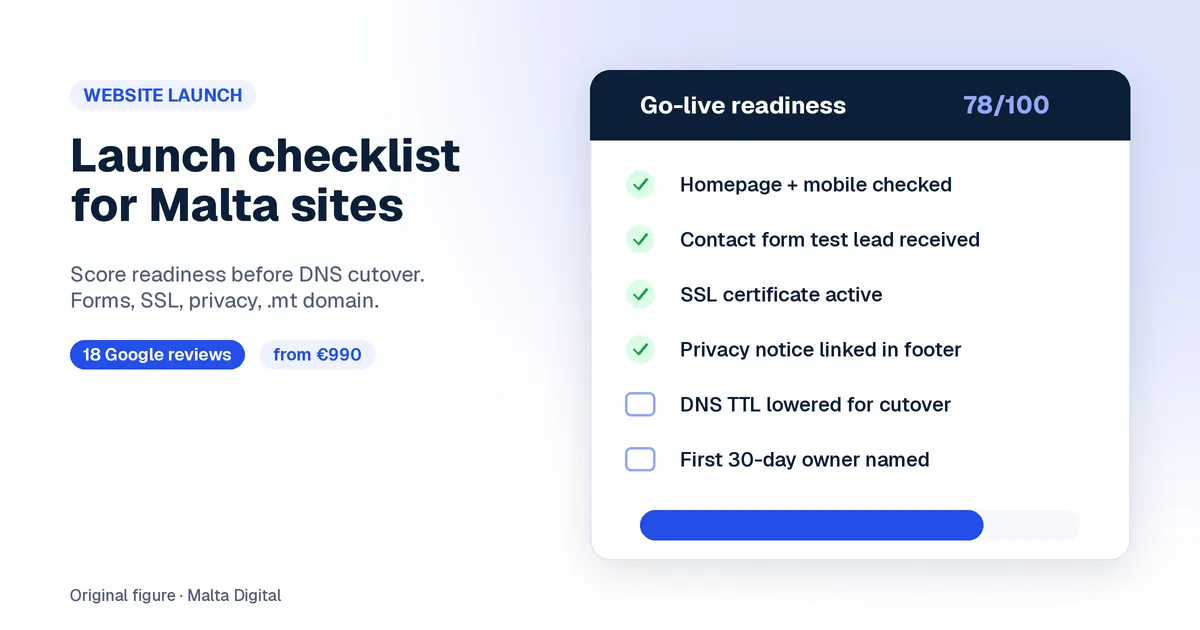
Forms, SSL, privacy, redirects and a named owner for week one.

GDPR, cookies, Article 8C details and a full checklist.
A useful first step
Professional Website from €990, Business Website from €2,490 and Growth Website from €4,900. Built to the same standard as this site, with the domain and code in your name.
Step 1 of 2
A few quick questions, about a minute. We usually reply within 2–3 hours.