Signature dishes
Short video of the food being made or served.
Close-ups, sound and steam. The first two seconds decide whether people keep watching.
Facebook & Instagram ads · Restaurants
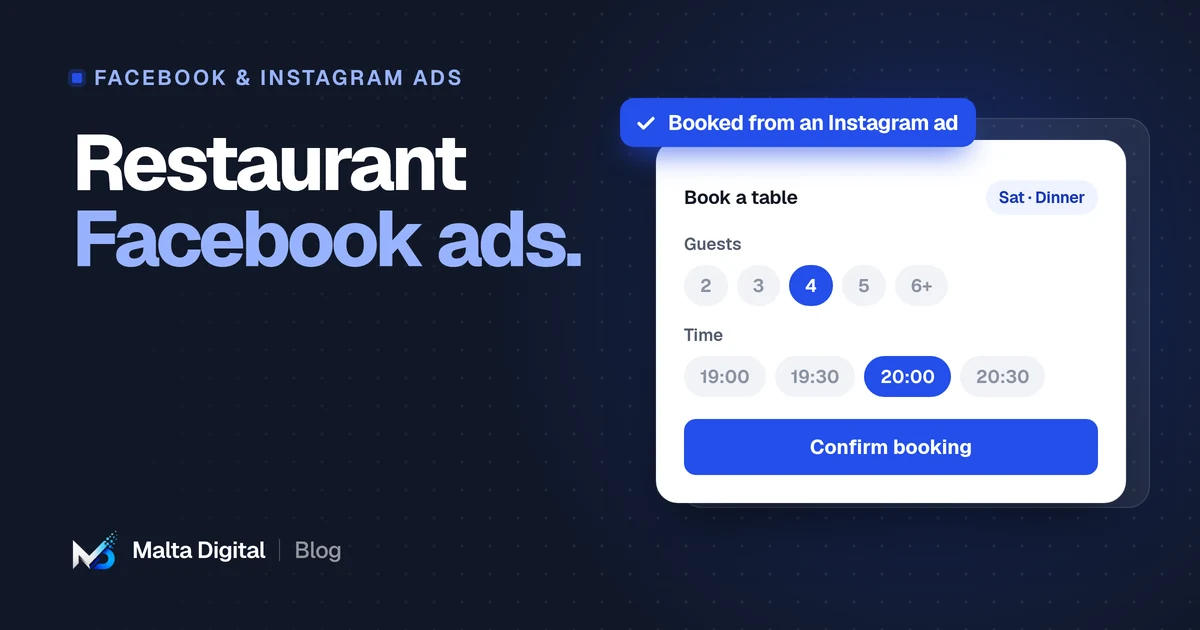
Facebook and Instagram ads work well for restaurants because people choose where to eat with their eyes, often while scrolling. They work best with one clear goal, such as table bookings or event sales, a tight local audience, food-first video and a way to track bookings. Boosting random posts rarely fills tables.
By Malta Digital · Published · Updated · 5 min read
Do they work
They can, and food is one of the easier things to sell on Meta. A plate of fresh pasta or a sunset terrace does most of the work, as long as people see it at the right time and can book easily.
Where restaurants go wrong is the goal. Ads set for likes bring likes. Ads set for bookings, messages or calls, and tracked properly, bring guests.
Restaurants usually need one of four things from advertising. Pick one per campaign, because each needs different settings and creative.
A campaign trying to do all four usually does none of them well.
Who to target
People who live within a reasonable drive. Good for weekday lunches, regulars and family meals.
People currently in Malta or Gozo, often near tourist areas. Good for summer and for places close to hotels.
Office parties, birthdays and celebrations. Plan these campaigns weeks ahead.
People who visited your website or booked before. Remind them of a new menu or season.
Keep locations realistic. A restaurant in Marsaxlokk can attract people from across the island for a long lunch. A café in a business area mostly serves people within walking distance.
Ad ideas
These are formats that suit restaurants. Test several and keep what brings bookings.
Signature dishes
Close-ups, sound and steam. The first two seconds decide whether people keep watching.
The setting
People book the experience as much as the food, especially visitors.
Events and set menus
A specific night with a clear date and a booking link gives people a reason to act now.
Seasonal moments
Start promoting early. Group bookings for December are often decided in October and November.
Use real photos and video of your own food and place. Stock images make people suspicious, and they are easy to spot.
Visitors and Gozo
Visitors and residents respond to different things, so it often pays to run them as separate campaigns.
Visitors
The view, the setting, local dishes and how easy it is to find you. Many visitors look for places to eat on the day, so keep the booking route short.
Residents
New menus, set lunches, events and family offers. Residents already know the area, so the offer matters more than the view.
Gozo restaurants have a third audience: people in Malta planning a day trip or weekend. Reach them before they travel, with a clear reason to make the crossing and a way to book ahead.
Tracking
This is the part most restaurants skip, and the reason many think ads do not work.
Connect your booking system or website to the Meta Pixel and Conversions API, so each reservation is tracked.
Use call and message buttons, and count the conversations that turn into bookings.
Use an offer mentioned only in the ad, or simply ask guests how they heard of you.
Look at covers and bookings during campaigns against similar weeks without them.
An example plan
This is an illustration of how a restaurant campaign could be structured, not a result.
Check tracking on the booking page. Film three short videos: a signature dish, the room or terrace, and the team.
Launch a bookings campaign to residents nearby, with the three videos as separate ads.
Add a campaign for a specific event or set menu, with a date and a booking link.
Compare bookings and covers. Keep the best ads, replace the weakest, and plan the next month.
The point is to test a few clear ideas, measure bookings, and build on what works rather than posting and hoping.
Planning the year
More visitors and outdoor dining. Target people currently in Malta and show the terrace or the view.
Village feasts bring people into specific localities on specific weekends. Worth a short local campaign if you are nearby.
Focus on residents, weekday offers and early Christmas bookings.
Comfort food, events and gift vouchers. Quieter weeks are a good time to test new ads.
Common mistakes
None of these needs a bigger budget to fix. They need a clear goal and someone checking the results each week.
The basics first
Ads bring attention. These basics turn that attention into guests.
A few straight answers
Yes, when the campaign has one clear goal such as bookings or event sales, a local audience, good food video and tracking. Boosting random posts for likes rarely fills tables.
Usually both from the same campaign. Instagram is strong for visual discovery and visitors. Facebook often reaches older residents and families. Let the results decide the split.
Use an offer mentioned only in the ads, ask guests how they found you, and compare covers in campaign weeks with similar weeks without ads.
Group and office bookings are often decided weeks ahead, so many restaurants start in October or early November.
Often, yes. Many booking tools support the Meta Pixel. We can also build a booking system with tracking included.
Keep reading
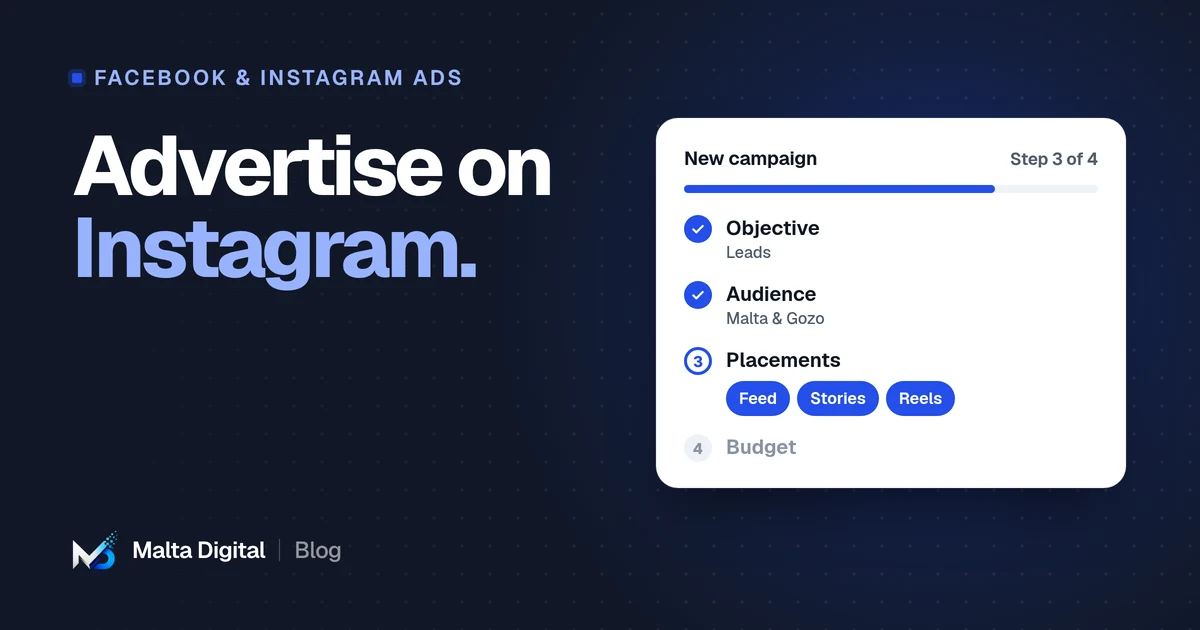
Account setup, objectives, audiences, formats and budget, step by step, with notes for Malta.
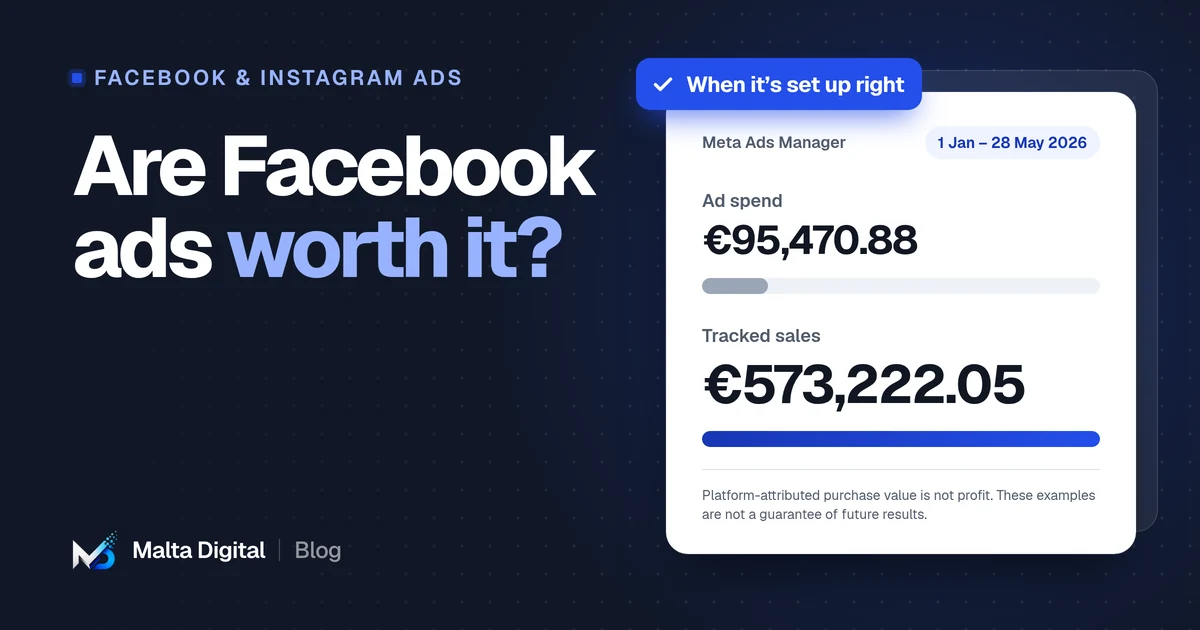
When Facebook and Instagram ads pay off, when to wait, and how to judge results honestly.
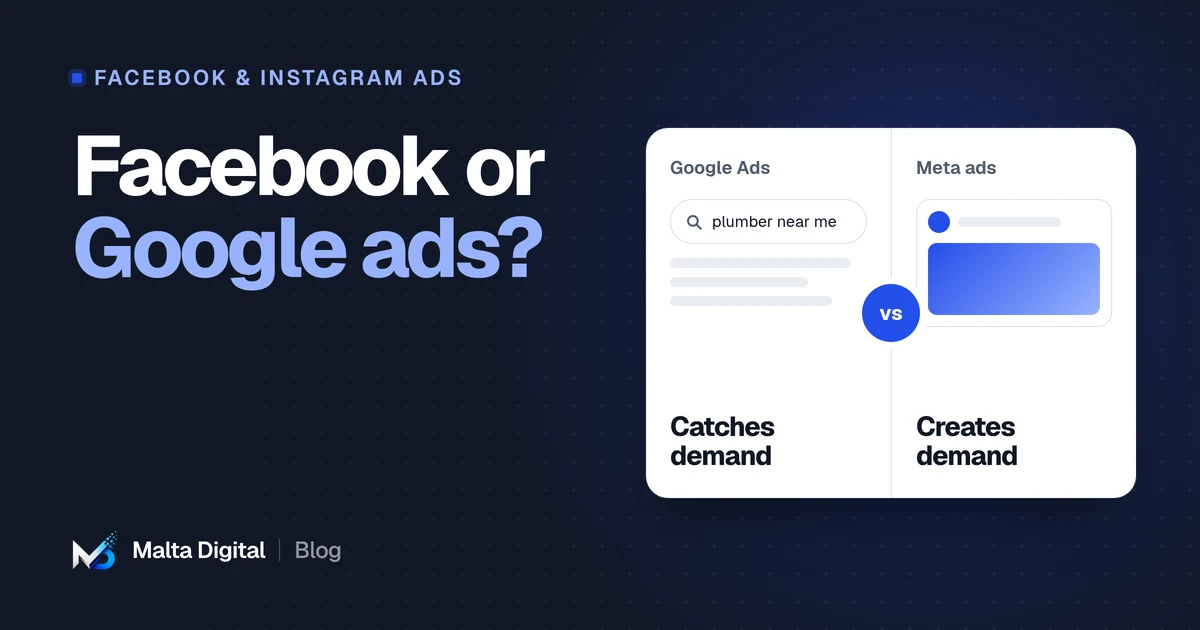
Search ads catch existing demand. Meta ads create it. How to choose for your business.
Restaurants and cafés
Show us what you’re running now. We’ll tell you what we would change for bookings, not likes. Initial review at no charge.