Ready-made CRM
Monthly subscription, quick to start.
Tools like HubSpot, Zoho or Pipedrive work well when your process is fairly standard. You adapt to the software, and costs grow per user.
Systems & automation · CRM
A CRM, short for customer relationship management, is one system that keeps every customer, enquiry, conversation and follow-up in one place. It replaces scattered spreadsheets, WhatsApp chats and email threads, so nothing slips and everyone sees the same information. A small business needs one when leads start getting lost or nobody knows who followed up.
By Malta Digital · Published · Updated · 5 min read
The meaning
At its simplest, a CRM is a shared list of the people your business deals with, plus a record of everything that happens with each of them.
Names, phone numbers, emails, notes and history, in one record per customer.
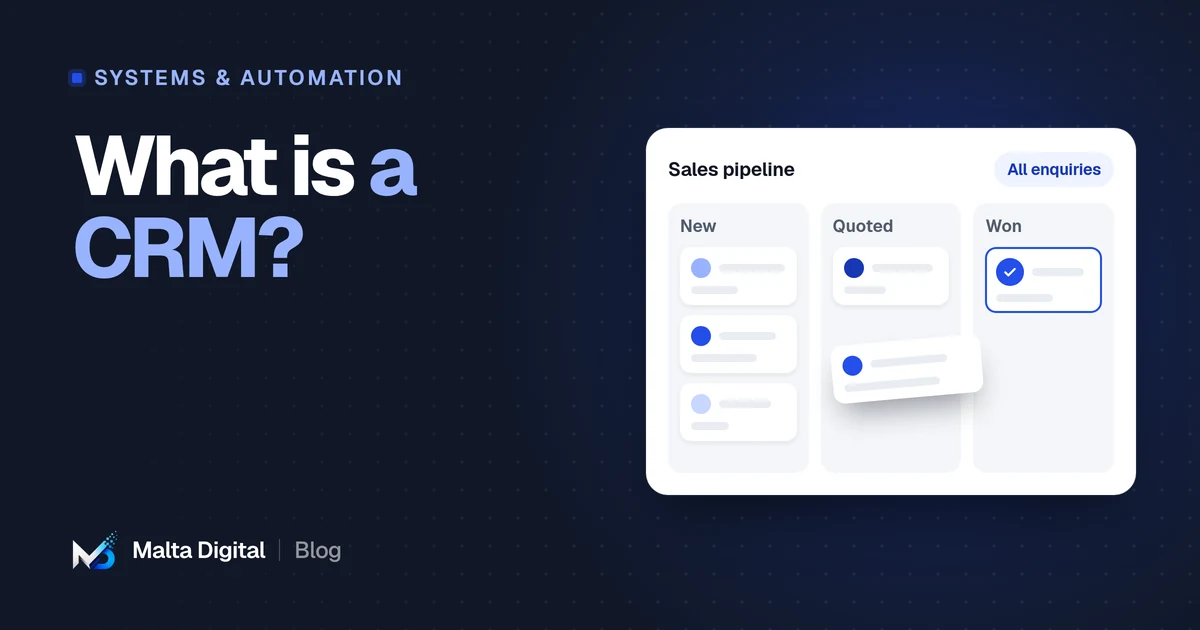
Each lead from your website, ads, phone or WhatsApp, with its stage: new, quoted, won or lost.
Who needs to call whom, and when, so follow-ups do not depend on memory.
Emails, WhatsApp messages and calls linked to the customer, where the tools allow it.
How many enquiries came in, from where, and how many became customers.
Signs
If two or more of these sound familiar, a CRM will probably pay for itself in follow-ups alone.
Day to day
Here is how one enquiry might move through a simple CRM.
A form on your website or an Instagram lead ad creates a new contact, tagged with where it came from.
The CRM gives it to the right person and sets a reminder to call within the hour.
The quote is logged, and a follow-up task is set for three days later.
The deal is marked won or lost, with a reason. Reports update on their own.
Nothing here is complicated. The value is that it happens every time, for every enquiry, without relying on anyone’s memory.
Types
Ready-made CRM
Tools like HubSpot, Zoho or Pipedrive work well when your process is fairly standard. You adapt to the software, and costs grow per user.
Custom CRM
Fits your exact process, connects to your existing systems and has no per-user fees. Takes longer to build and costs more upfront.
Many small businesses should start ready-made. A custom CRM makes sense when your process is unusual, when you need it tied closely to bookings, quotes or operations, or when per-user fees add up across a larger team.
Connections
Every enquiry lands in the CRM automatically, with where it came from.
Leads from ads go straight in, so they can be called while they are still interested.
Conversations linked to the customer record, with the WhatsApp Business Platform where needed.
Messages and meetings logged against the customer.
So you can see what each customer has bought.
Choosing
Write down how an enquiry becomes a customer today, step by step, and who does what.
The connections, reports and permissions you need. Ignore features you will never use.
Test with a few weeks of real enquiries before rolling it out to everyone.
Import existing contacts, train the team, and stop the old spreadsheets on a set date.
The best CRM is the one your team actually uses. Simple and used beats powerful and ignored.
GDPR in Malta
A CRM holds personal data, so EU data protection rules apply. Malta’s regulator is the Information and Data Protection Commissioner (IDPC).
Questions to ask
For a custom CRM, also ask who owns the code and the data, and what support costs after launch.
Common mistakes
Start with the basics: contacts, enquiries, stages and reminders. Add more once the team uses it every day.
Cost
Ready-made CRMs charge a monthly fee per user, plus time for setup and connections. A custom CRM is a project cost. Our custom CRM projects start from €7,500, excluding VAT, depending on the process and connections.
Larger digital projects may qualify for the Digitalise your SME grant. Check the rules before you start, because work must not begin before the grant agreement is signed.
A few straight answers
Customer relationship management. In practice, it means one system for customers, enquiries, conversations and follow-ups.
When enquiries come from several places, leads get lost or only one person knows each customer’s status, a CRM usually pays for itself.
The one your team will use and that fits your process. Ready-made tools suit standard processes. A custom CRM suits unusual processes or closer links to your operations.
Yes, many can, usually through the WhatsApp Business Platform. A custom CRM can be built around WhatsApp from the start.
Our custom CRM projects start from €7,500, excluding VAT. The final cost depends on the process, users and connections.
Keep reading
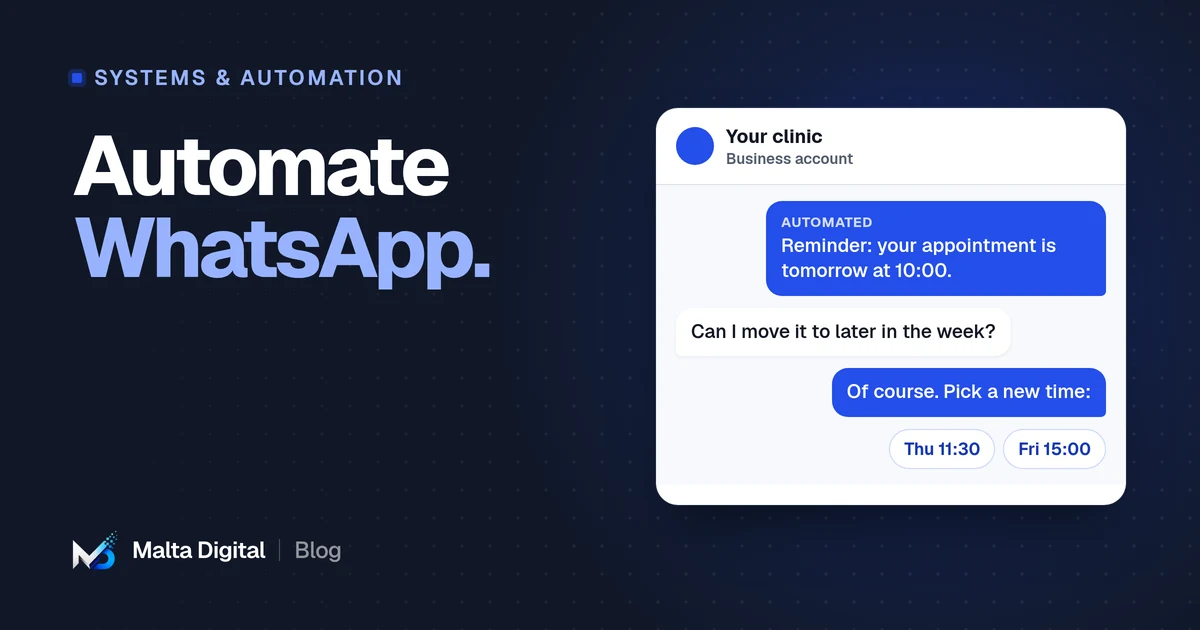
The free app, the WhatsApp Business Platform, templates, opt-in and connecting to your CRM.
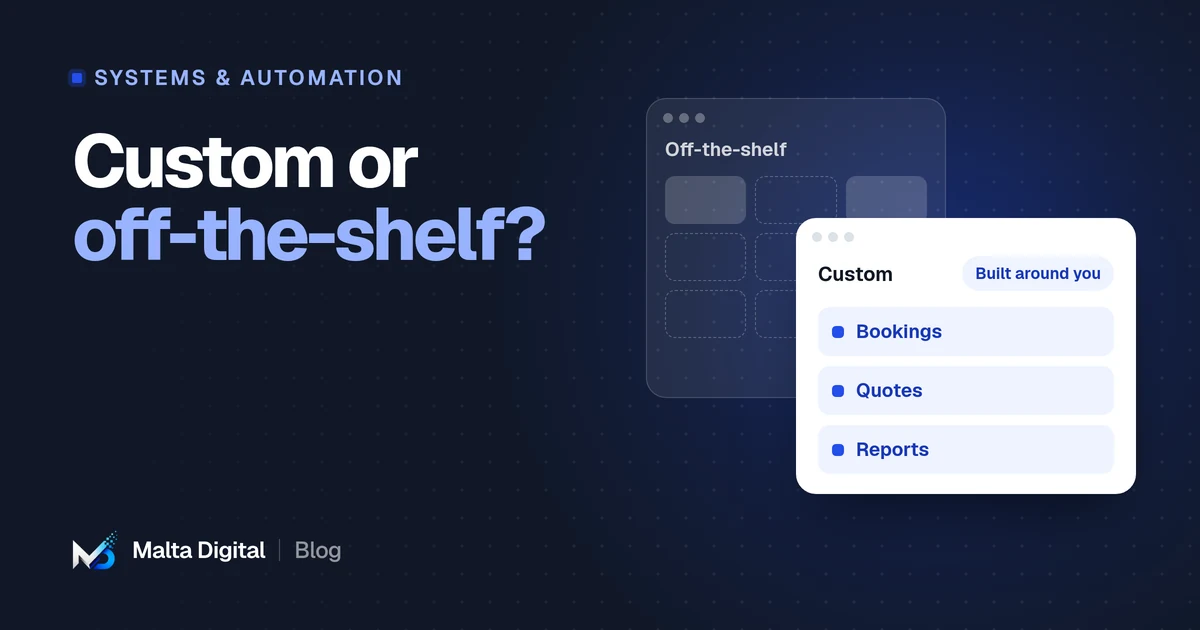
How to compare cost, fit, risk and ownership, and when a mix of both makes most sense.
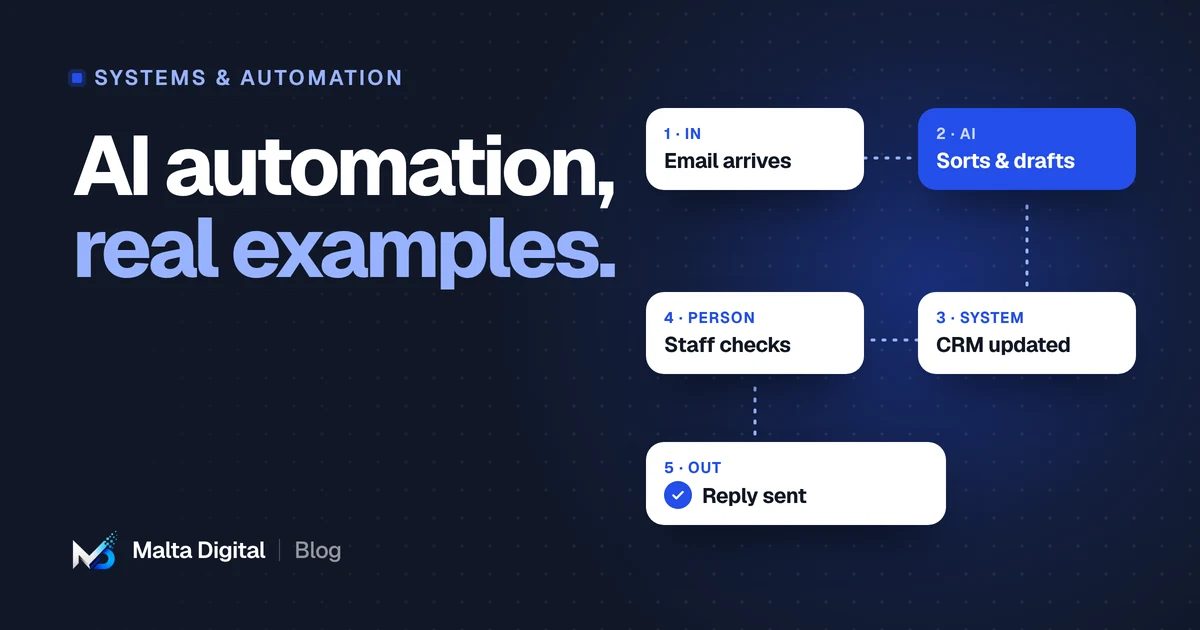
Twelve practical examples, where AI helps and where it does not, and the rules to follow.
Tired of lost leads?
Tell us how enquiries reach you and how you follow up. We’ll suggest whether a ready-made or custom CRM makes sense.